“Chemo is your friend, they said…
…it nukes the cells, it knocks ‘em dead!”
Chemotherapy is the process of using cytotoxic drugs to kill cancer cells, that is cells that are dividing uncontrollably. They don’t just kill the cancer cells though, they also kill normal fast-dividing healthy cells, like hair cells, which leads to all sorts of nasty side effects. Although chemo is designed to make you better, the process can make you very sick.
Chemo is used either for curative purposes, to shrink tumours before subsequent radiation or surgery, or for palliative care to relieve symptoms. There are many different chemotherapy regimens, which basically means chemo could be one drug or a combination of drugs, all given at different dosages, frequencies and durations. Chemo is given in cycles, often one session every 2-3 weeks, which means your body can recover in between. It is generally given as an outpatient, so you are attached to a drip in the oncology ward for a few hours, but the drugs can also be given in tablet form.
I didn’t know anything about chemo before starting, as nobody close to me had been through it before. In some ways this was a blessing, as there was no time to prepare in the fateful few weeks between my diagnosis and first treatment. I had one session every 2 weeks, totalling 12 over 6 months. That period is now somewhat of a blur, but I was vaguely aware of the country simultaneously cycling through three prime ministers and two monarchs.
There are definitely things I wish I’d known beforehand, so, in no particular order, here are my top tips for surviving chemo… (there are 15 in total, but I’ll break them down into three separate posts to avoid this becoming a novella!)
- Make use of the support out there
- Ask questions (don’t Google!) and don’t feel stupid for not understanding something
- Get a PICC Line
- Prepare for hair loss
- Prepare like you would for a long-haul flight
Make use of the support out there
You’ve entered a new world. You are likely surrounded by people who want to support you in the best way they can, but who have never been there themselves. One of the nurses said that once the diagnosis whirlwind calmed down, I’d be amazed at the support out there. She was right. Nobody wants to join the cancer club, but there’s an empathetic group of people already there, walking the same path, who will affirm your experiences. It is incredibly reassuring to talk to people who “get it.”
Whichever type of cancer you have, there is a charity that can provide support and connect you with others. Here are the ones that helped me:
Cancer support for young adults (20s, 30s and 40s):
- Shine Cancer Support run a great Breakout programme, where you are connected with other young people going through cancer. They also have a conference, podcast, blog and YouTube channel.
- Trekstock also provides information and support tailored towards the young adult cancer experience. They run a bespoke exercise programme, designed to keep you moving through and beyond cancer.
General cancer charities:
- Lymphoma Action have online support groups, special focus meetings and a wealth of books and information covering every aspect of the lymphoma experience. They also have a closed Facebook support group.
- CancerCare offer support and complementary therapies to anyone going through cancer in the Cumbria area.
- Macmillan Cancer Support are probably one of the largest and most well-known cancer charities. They provide support and advice on everything from financial concerns, work matters, to dealing with treatment. They also offer free counselling sessions for anyone living with cancer.
Hospital support
- You will be assigned a CNS (clinical nurse specialist) who is your liaison with your consultant, and can answer any questions about your diagnosis and scan results etc. They usually have a separate answer machine and/or email to contact them with any queries.
- You will also have access to a 24/7 chemo helpline that connects to your oncology department during working hours, and to a national helpline out with those hours (who are able to access all your medical records). Ring them up with ANY problem or concern related to your chemo – they are there to help you! It is much better to nip a small problem in the bud (raised temperature) before it becomes a larger problem (full-on infection that requires hospitalisation).
- Buy a thermometer – either from the hospital pharmacy or online – as you will be asked for your temperature each time you ring.
Family and friends
Accept help from loved ones too. I found it hard to give up independence, but it is necessary. I felt guilty that everyone else’s lives were being turned upside down because of my illness, but your loved ones love you and want to help. When everything changes overnight in your life, the familiarity of relationships can be an anchor and a comfort in an unknown, stormy sea. And while you are at the centre of the storm, they are very much in the trenches too and need their own help and support (which the above charities can also provide).
A cancer diagnosis is too much for one person to carry alone – always remember that you don’t have to.
Ask questions (don’t Google!) and don’t feel stupid for not understanding something
I have both an undergrad and a Masters degree in Biology. Granted they were more focussed on the environmental side, but I say that to say I studied human biology to quite a high level. Yet in the moment I was told I had lymphoma, I couldn’t have told you a single thing about the role of my lymphatic system or the location of my lymph nodes.
Most of us did some kind of biology at school and in the (hopefully many years) between (maybe paying attention) at school and receiving a diagnosis, the chances are that we’ve forgotten most of what we learnt. Consultants are experts in their field, and they work with specific diagnoses, affecting specific areas of the body, day in and day out. When they rattle off a bunch of medical terms, I think they sometimes forget that it’s been many years since the rest of us had to label a diagram of our body in class.
When discussing your diagnosis and the effects of chemo on your body, don’t be afraid to ask things that might seem obvious and don’t feel stupid for not understanding something. I asked what the big thing (aside from the tumour) was in the middle of my chest scan. Turns out it was my heart. But that’s okay because I was in shock, and I’d never seen my insides on a scan before.
It’s also much better to ask the medical professionals, or people in support groups, your questions rather than Google them. 2am Google searches will tell you that a new rash means you have hours left to live, the chemo helpline will reassure you that it’s a normal response to your treatment. Google is NOT your friend!
Get a PICC Line

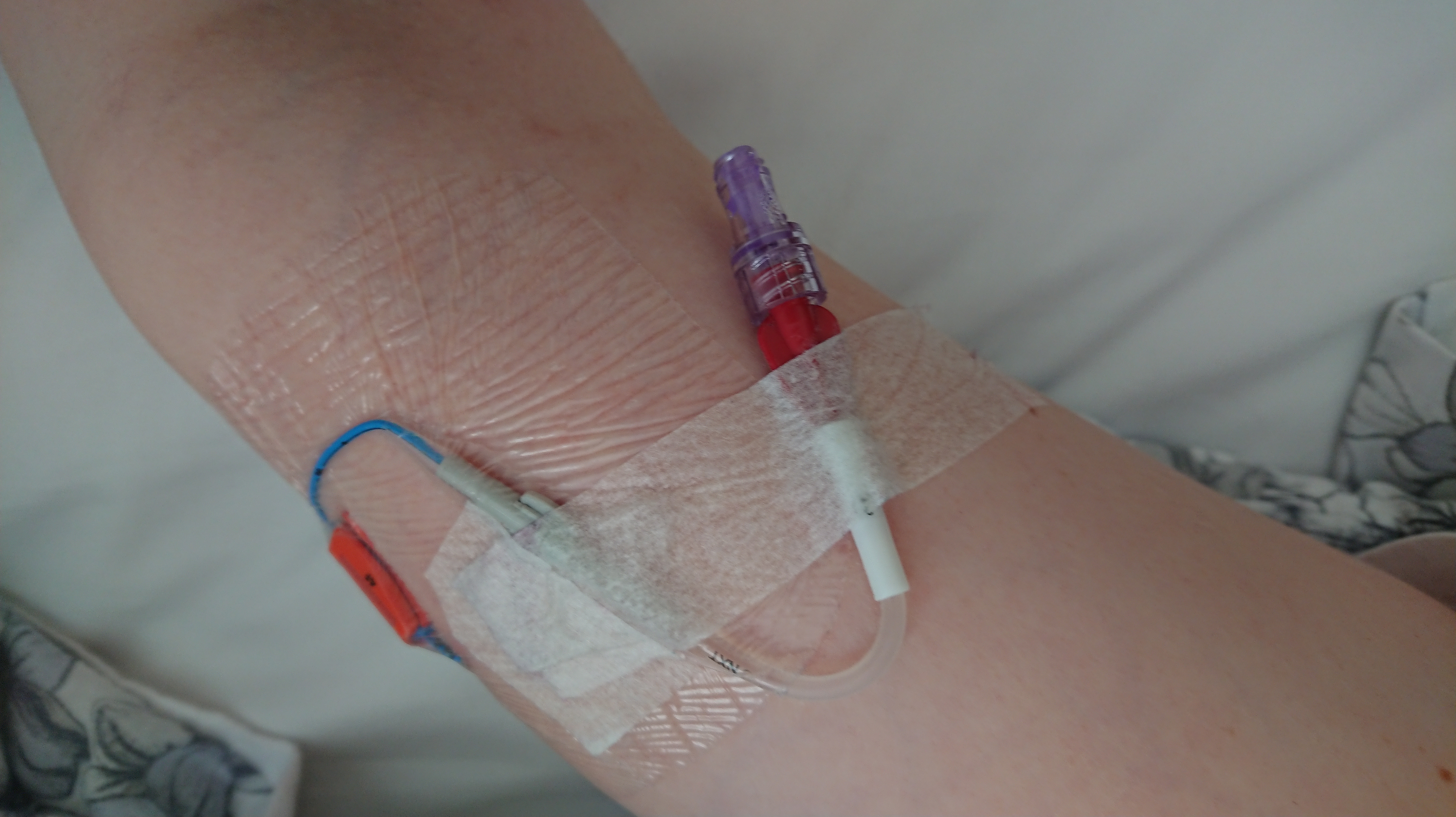
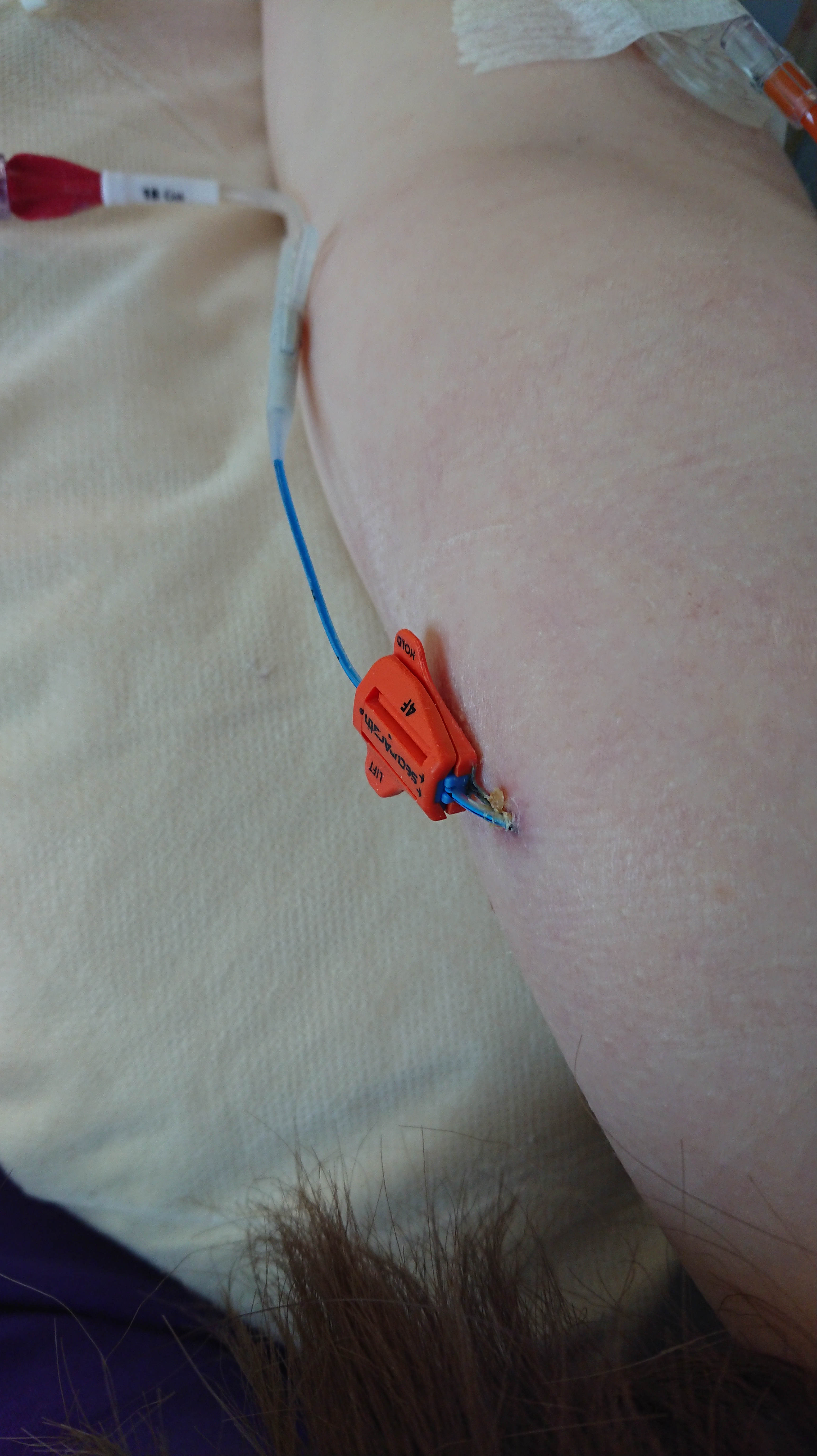
A PICC line, otherwise known as a Peripherally Inserted Central Catheter line, is a small thin tube threaded through the vein in your upper arm that comes out near your heart. The line allows chemo drugs to be given directly into the vein, rather than having to be cannulated every session.
If the drugs go directly into your veins in your hand (over many sessions), the veins will become hardened and stiff, which is something they won’t recover from. This can also lead to a stinging or burning sensation in the vein as the drugs travel up the arm. A PICC line prevents this and can be left in place for several months, so I’d really recommend one if you are having several chemo sessions. Blood can also be taken from the line (required before each session), which saves the nurses having to find a vein every time.
Having a PICC line does create extra appointments though, as it needs to be flushed (blood drawn out with a syringe, saline solution flushed in to prevent blockages) and the dressing must be changed every week. You can’t go swimming, although for the sake of immunity this probably isn’t recommended right now anyway. Baths aren’t recommended (although if needs must have one the night before the dressing is going to be changed). You can get an arm protector to keep the line dry during showers.
My line was inserted on the first day of chemo. It was straightforward, painless, and done in about an hour under local anaesthetic. (My overwhelming memory was being desperate for the loo after drinking lots of water to make the veins nice and plump…). A big, padded plaster was put over the line and it seemed like a massive obvious thing on my arm, but I got used to it really quickly.
My arm swelled slightly as my body reacted to the foreign object, so I’d recommend getting it inserted a few days before the first chemo if possible. Later on, I had a few issues with backflow of blood in the line and it shifting position slightly to be too close to my heart. This sounds alarming, but it was adjusted quickly. The line was removed painlessly – they literally just pull it out – and left only a small scar.
Useful PICC related links:
- Bold Beanies make some pretty picc line covers and LimbO do some plain ones.
- Picc Line Waterproof Protector from LimbO keeps your arm dry in the shower. (The chemo nurses can give you a prescription for this.)


Prepare for hair loss
I don’t think you can ever prepare emotionally for hair loss. It’s a horrible side effect of chemo. It can be helpful to know roughly what to expect though (and decide if you want to shave, but don’t feel pressure to). Although I didn’t know how and when it would happen, I did like knowing I had some headscarves and wigs ready.
Preparing for hair loss
- Headwrappers provide a hair loss advisory service, focusing on alternatives to wigs and practical tips. They run sessions on how to tie headscarves, as well as Lashes & Brows workshops (it’s not just the hair on your head that goes!).
- Hair nets can be worn at night when your hair is shedding. They catch loose strands so they don’t end up all over your pillow.
Headscarves and accessories
These sites all sell stylish and comfortable headscarves and sleep caps:
- Boldbeanies
- Chemotherapy Headwear – do some really great pre-tied headscarves.
- Masumi Headwear
- Headscarves by Ciara
- Etsy
Wigs
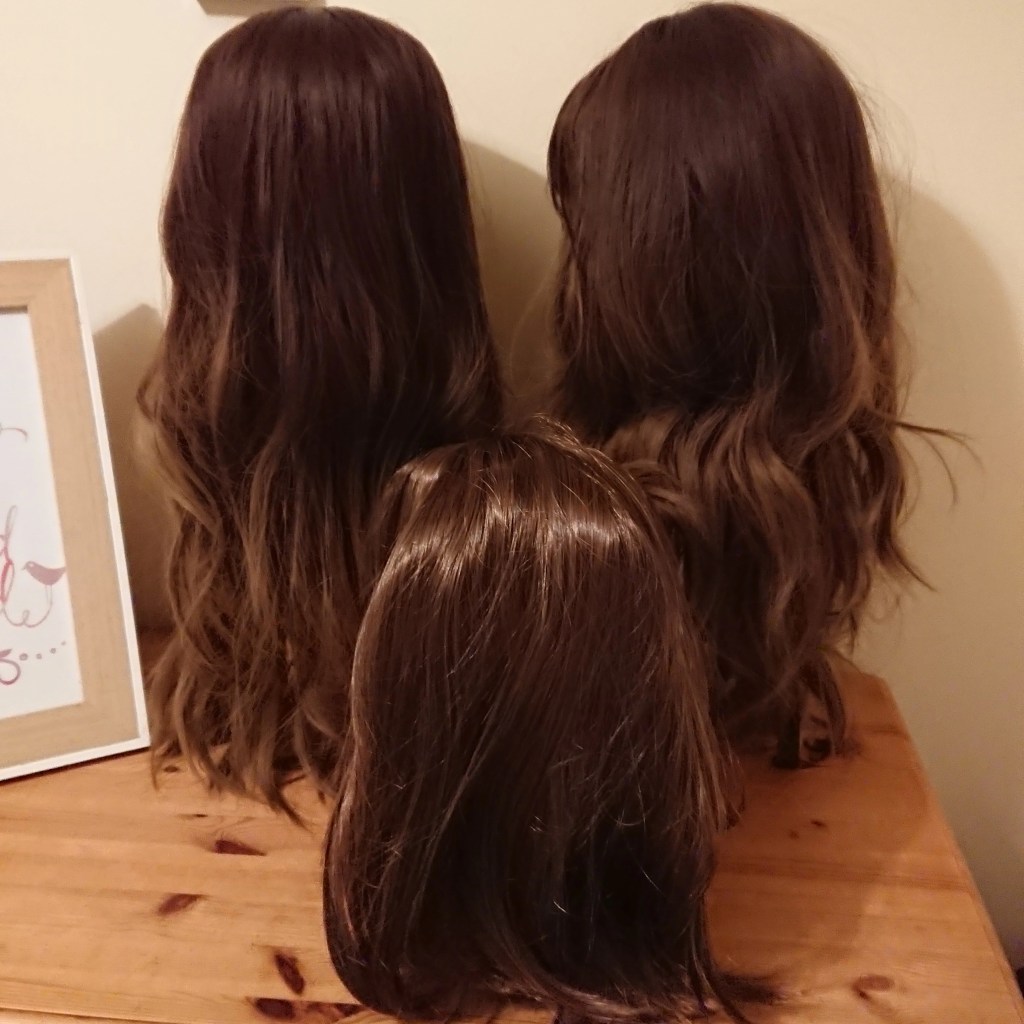
The NHS will pay £120 towards a wig at one of their recommended shops. Your chemo nurses will give you a wig referral form and explain how this works in your area. I rushed off to buy a very expensive wig that I didn’t end up using, before finding much cheaper ones on the Shein website – great if you want to see what works for you.
I have quite a large head and most wigs are designed to be one size only, which is crazy considering the variety of head sizes! If your head is on the petite or the larger side, there are options out there, even if you have to spend a bit more time hunting them down. I bought a Gisela Mayer wig with a large cap size that fits really well.
The chemicals in regular shampoo can damage synthetic wig fibres, so I used these products and roughly followed these wig care instructions. I probably used more products on my wigs than I’d ever used on my own hair, but they did always look nice and shiny.
Also useful is a wig stand for storage and wig caps to wear beneath your wig. They prevent friction between hair regrowth and the wig (I’d sometimes feel them pop off, but the wig always stayed in place).
Hair Regrowth
- A silk pillowcase is gentler on your head and scalp.
- I was told Kerastase shampoo helps hair regrowth. I didn’t do much research into this, but it seems to be working (it’s pretty pricey, although when you don’t have much hair a bottle lasts for months).
Prepare like you would for a long-haul flight
Once all the obs and pre-meds and questionnaires had been completed, the drugs started going in and the nurses would say “lie back and enjoy your flight Laura.” When the food trolley came round, they’d exclaim “it’s duty free!’”
Prepare for chemo like you’d prepare for a long-haul flight. The night before, I’d recommend:
- Deciding what comfy clothes to wear (t-shirts or loose tops best for access to PICC line).
- Packing your bag with headphones, something to read/watch, snacks, lunch, drinks and ear plugs. Take a blanket too as I always found the chemo room quite cold.
- Bonus tip: always, always take some form of entertainment to any appointment – even a ‘routine’ blood test. You never know which appointment will turn into a 3 hour stint.
- Arranging lifts there and back and clearing the evening of chemo so the only plan is going to bed.
- Writing a list of any questions you have for the nurses about your treatment.
- Hospitals have cutting edge technology accessed through antiquated appointment systems. Remember that yellow card so they can fill in your next batch of appointments!
Phew, 5 tips down, 10 more to go. Stay tuned…
 Laura writes...
2 thoughts on “Top Tips for Chemo (Part 1)”