
We’ve just returned from a fantastic ten days in Croatia and Slovenia. We kicked things off in Zagreb, which was a lovely, unexpected addition to the itinerary, chosen mainly because it was the closest place to Slovenia with a direct flight from Manchester. We stayed for three nights in Liberty Apartments, and found the city to be calm, clean, friendly, and refreshingly untouristy compared to Prague or (so I’m told) other Croatian cities. There are no wow sites, but it has a really nice vibe. If you ever find yourself passing through en route to somewhere else, I’d definitely recommend a stop. Here’s what we got up to.
Walking tour
We started our first day in Zagreb in the way that all good city breaks should: with a free walking tour. Ours was a Free Spirit Walking Tour, led by Luka, and it turned out to be one of the best I’ve done. He struck the perfect balance of history, sights, stories, and recommendations.
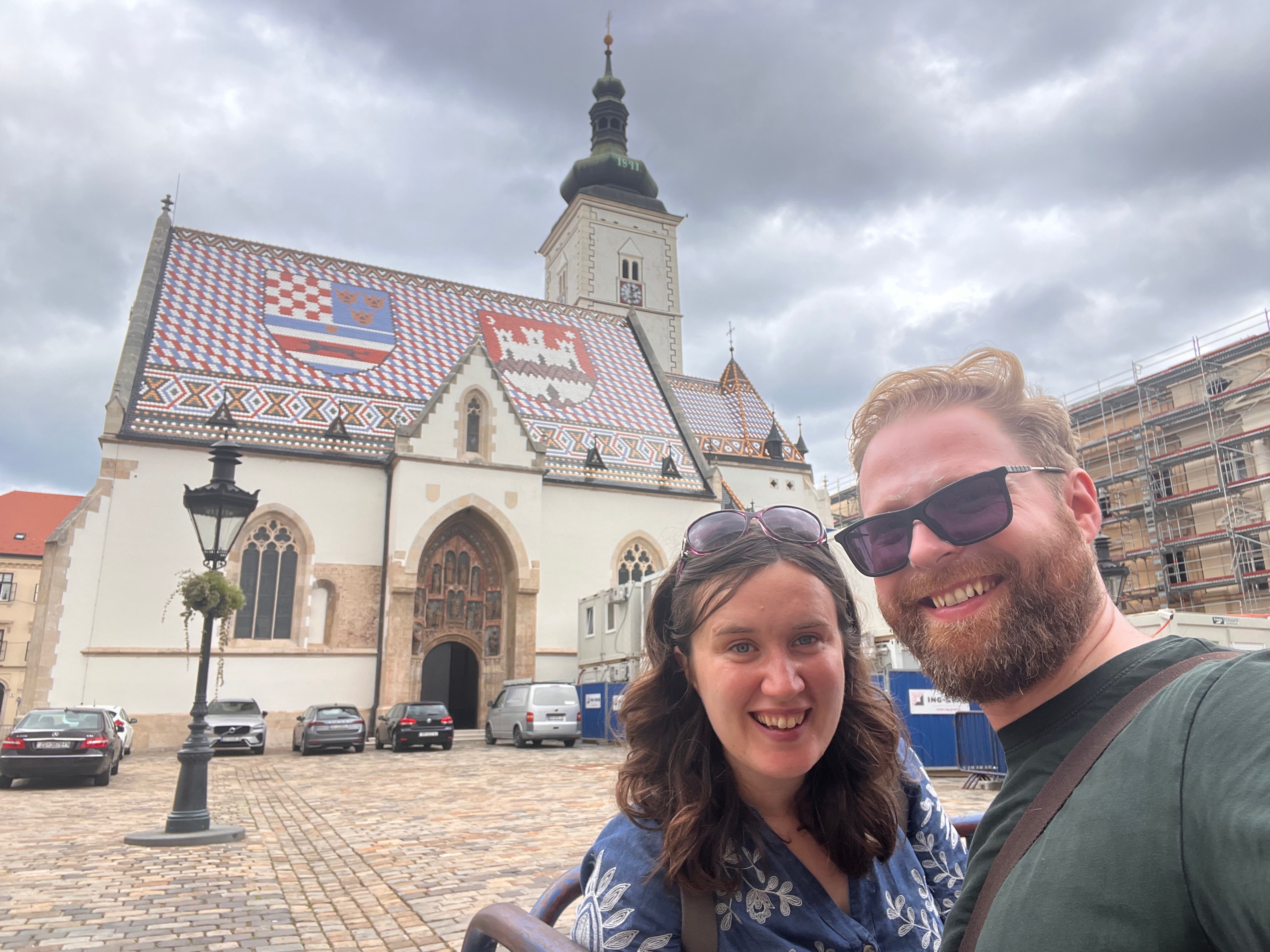
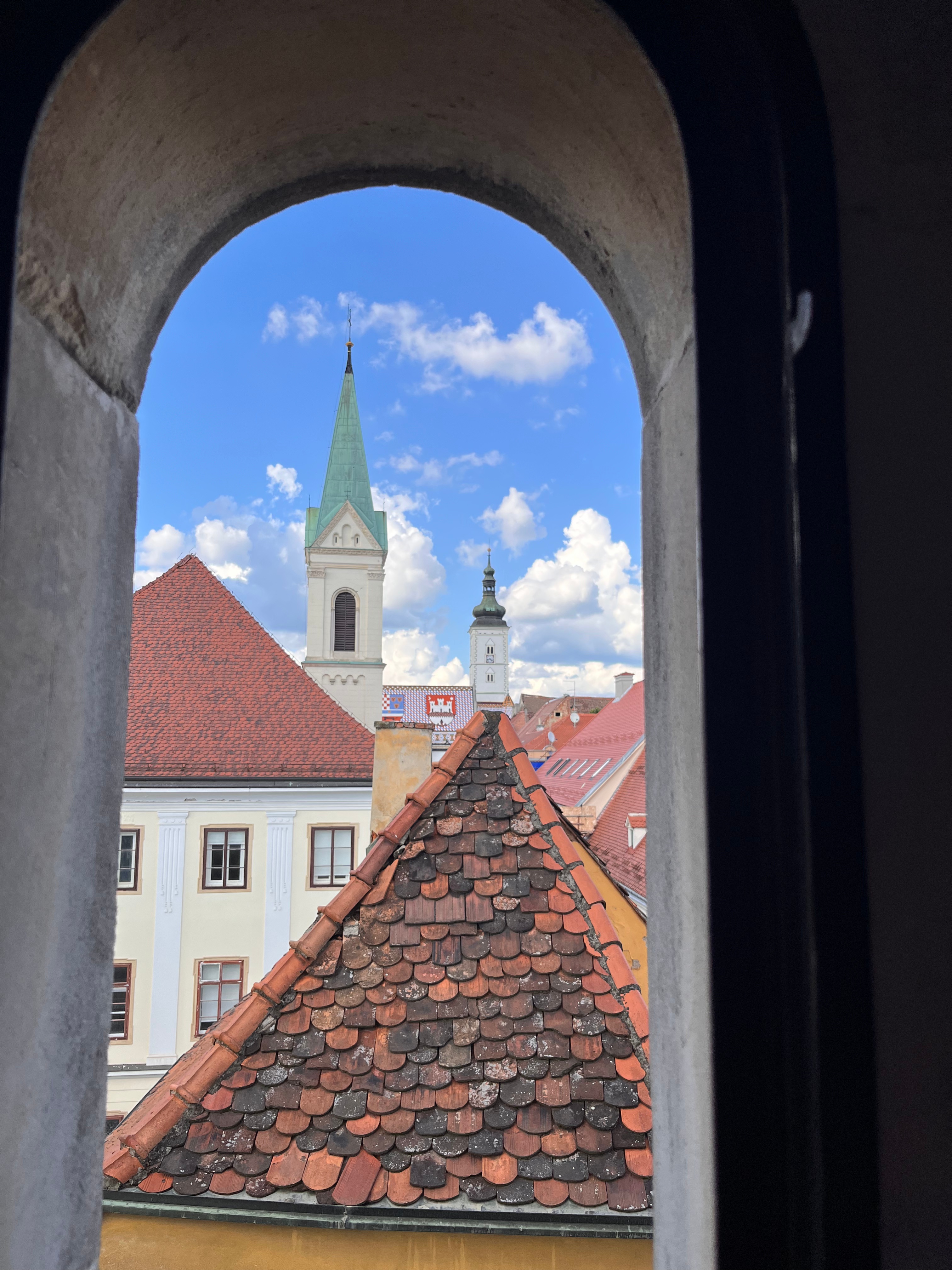
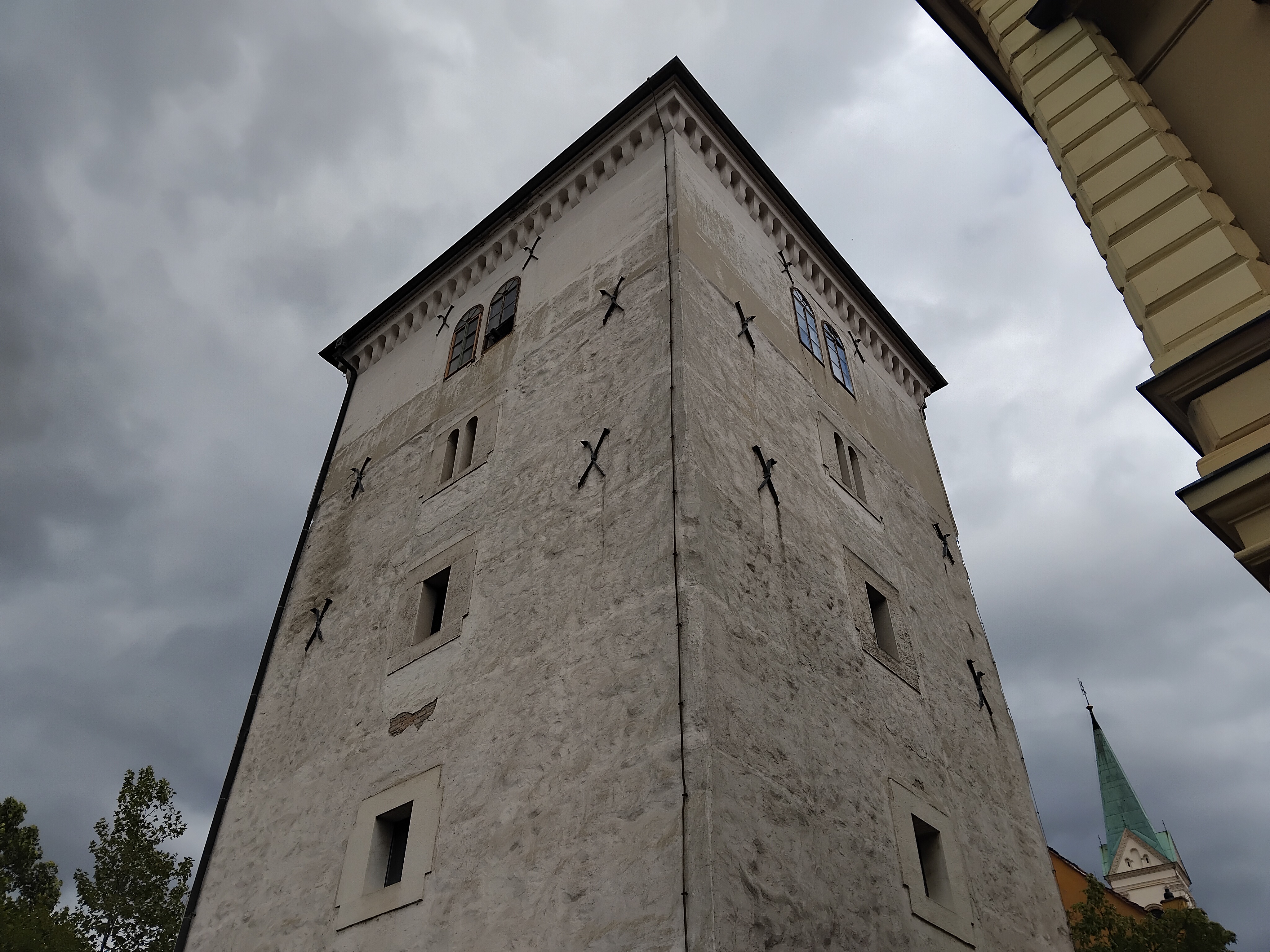
We enjoyed seeing Ban Jelačić Square, St Mark’s Church and Lotrščak Tower. Every day at midday, a cannon is fired from the Tower, which is a tradition that dates back to the 19th century. It was originally used to help all the church bell ringers across the city keep the same time. Only four people have ever had the job of firing it (yep, firing the cannon daily really is a legit job), which makes it one of the city’s most unique traditions.
Zagreb Cathedral towers over the Old Town, though its famous spires were hidden under scaffolding when we visited. The spires have had quite a turbulent history: engineers once worried about the stability of the left one, so they carefully removed it with a crane. Then, in 2020, an earthquake caused the right-hand spire to collapse, almost hitting the archbishop who happened to be having lunch in a nearby building.


Other fun facts we learnt along the way include…
- There are around four million people in Croatia, a quarter of whom live in Zagreb.
- Croatia has 1200 islands on its coastline, of which 49 have a permanent population.
- Dalmatian dogs were originally bred in the Dalmatia region in Southern Croatia, so hopefully Cruella doesn’t holiday there.
- 45 years is the longest time Croatia has gone without a war.
- Due to this turbulent past, if you were born in 1916 and lived to 80, you’d have held five different passports.
- Cravats originated in Croatia. Women tied them round their husbands necks before they went to war, in the colour red to mean don’t forget me and don’t cheat. The French loved the look and helped turn them into a fashion staple.
- The country’s culture varies a lot from north to south, with different foods and second languages. The north has a strong German influence and the south is influenced by the Italians. The coffee culture is strong throughout, however.
- Zagreb is one of the greenest capitals in Europe; highlights include a U-shaped park walk close to the main square, and a lovely Botanic Garden close to the train station.
The Museum of Broken Relationships
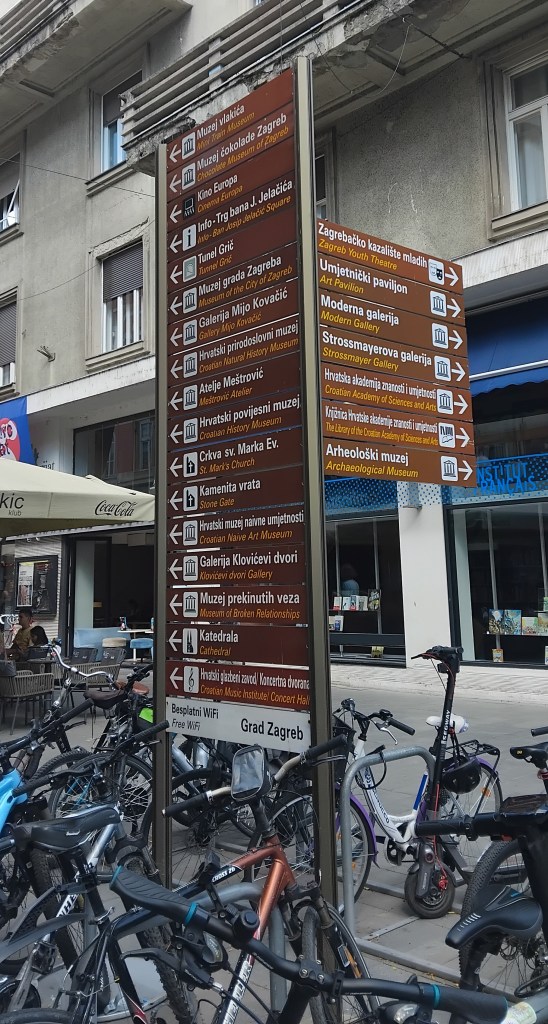
Zagreb has a lot of museums, as you can see from the sign on the left. We only had time for a couple, so we started with the most popular, the Museum of Broken Relationships.
I loved the concept of this place. We all have a story of a broken relationship, whether romantic, familial, platonic, or even with a hobby or object we once loved. We mark marriages and funerals, but this museum offers a ritual for people navigating the emotional upheaval of any relationship ending. It invites visitors to channel their grief and anger into creation by contributing an object that represents the relationship, along with the story behind it. Here are a few of my favourite pieces…
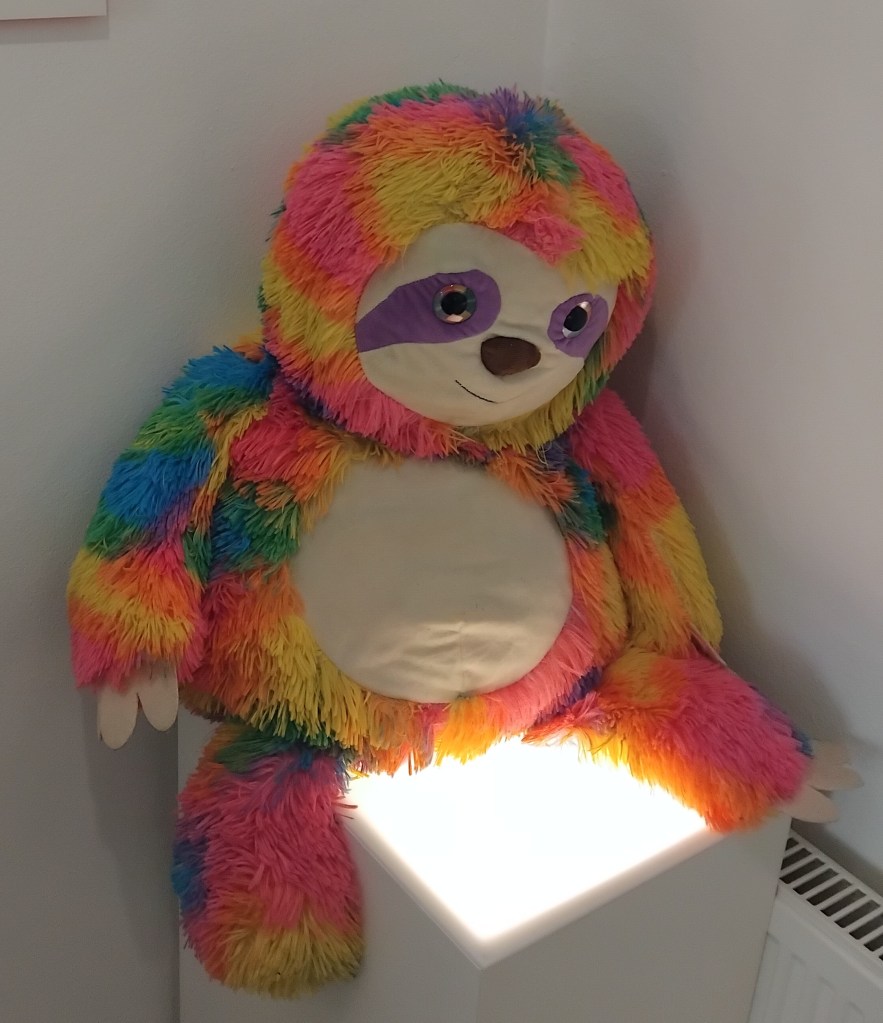
Arnulfo the Sloth, representing a 3-year relationship in Mexico City
“I didn’t expect you to come back from the supermarket with this big, hairy sloth, which you said was like me because it was always sleepy. It felt precious, like having you with me all the time. But as the years passed, Arnulfo ended up forgotten in a wardrobe, and we didn’t notice that the same thing was happening to us. One day I found it again, dusted it off, looked at it and remembered you. I realised that is was over between us and you are now just a memory that I will keep in the wardrobe of my heart.”
Pizza Maker from the USA, representing a 45 love affair with pizza
“Dear Pizza,
I miss you incredibly. It’s been four years this month. Sorry for the silence. I guess I owe you an explanation.
Remember how I loved you? But within two hours, I’d end up crying, erratic, foggy, and miserable. I thought that was just my personality, but it turns out it was gluten and casein intolerances. I had to say goodbye.
Most of the other foods were easy to give up, but I still dream about you. I miss your steam, the way you grease up the plate, your sweet, tangy richness.
I was in NYC recently and there was temptation at every turn. I could hardly stand it. Maybe I loved you too much. How could this happen? Maybe it’s our environment, or the genetically engineered cows and wheat. Did food allergies even exist twenty years ago? I’m sceptical.
I wish it weren’t so, but I do much better without you. Hard to believe there was once a time, when I was about three years old, that I only ate the crusts. Little did we know how things would change.
Please stay hot and tasty. I will always love you.
Love, Me”


Moss green woollen scarf from Denmark, representing a first love
“We were fifteen, and he was my first boyfriend. We started holding hands on a school trip, and a few weeks later, during a sleepover, the crush developed into a relationship, though I wasn’t quite sure what it meant to be someone’s girlfriend, nor did I feel ready for any of it.
For our one-month anniversary, he promised to knit me an emerald-green scarf — my favourite shade. Over the next weeks and months, I got many updates on its progress (his mum was helping him a great deal), though the scarf itself never seemed to materialise.
In the meantime, I realised I’d fallen out of love with him, but I convinced myself I couldn’t break up with him while he was still working on the scarf. It seemed cruel to leave someone with a half-knitted scarf, to let those loose threads unravel after all his effort and good intentions. So I waited roughly the time it takes a fifteen-year-old boy and his mum to knit a scarf, which turned out to be about two months.
When he finally brought it to school, it was the wrong shade of green. And when I told him I wasn’t in love with him anymore, he said, ‘Likewise.’”
We also went to the HaHaHouse, otherwise known as the museum of laughter. It had the friendliest staff and a wacky layout, including a slide into a ball pool to enter, a karaoke booth, a sumo wrestling area and all sorts of other weird and wonderful exhibits. It was a great way to laugh away an hour or so.
Where we ate
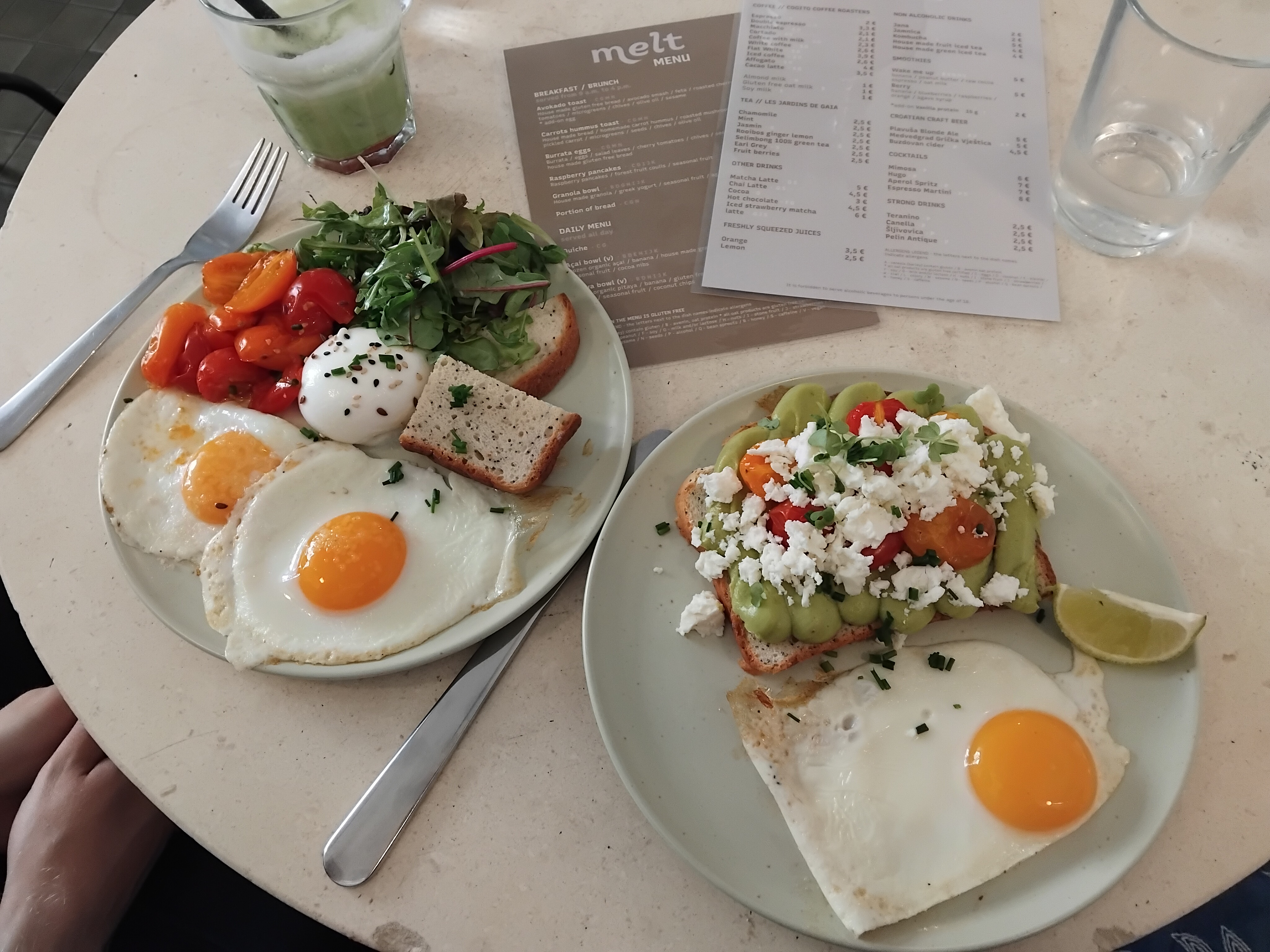
Melt was a trendy brunch spot. It was yummy, though similar to what you’d find in most other big cities. We had the Burrata eggs and Avocado toast and would recommend both.
Heritage was the real highlight. It is a tiny restaurant with an open kitchen, founded by a former MasterChef Croatia winner. They use traditional and fresh ingredients from all over the country and present them in a modern way. The menu detailed exactly where every ingredient was from, and the staff were so helpful. I’d really recommend the dried fig and walnut salad, which was a combination of mixed vegetables, cheese, dried pork neck, walnuts and dried figs. Delicious!
La Štruk serves only one dish (in several sweet and savoury variations) called štrukli, which is a soft dough filled with cheese and baked in the oven. It’s the ultimate comfort food. We sat out the front and only later realised that there is a large garden out the back, filled with seating and fairy lights.
And finally, the bakeries! I had no idea they were such a big thing in Croatia, but they’re literally on every corner. Possibly the best sandwiches of the trip came from the bakery at the train station.


Plitvice Lakes National Park
Another bonus of being in Zagreb was that it gave us the chance to visit Plitvice Lakes National Park on an organised day trip. Plitvice is a UNESCO World Heritage Site, and Croatia’s oldest and largest national park.
I remember visiting New Zealand years ago and feeling like it was Scotland on steroids, like the volume was turned up a little, everything just that bit crisper and sharper. I felt similarly comparing Plitvice to the English Lake District. Both are beautiful, but in Plitvice the water is brighter, the landscape more vibrant, the tree cover more substantial. It was stunning.

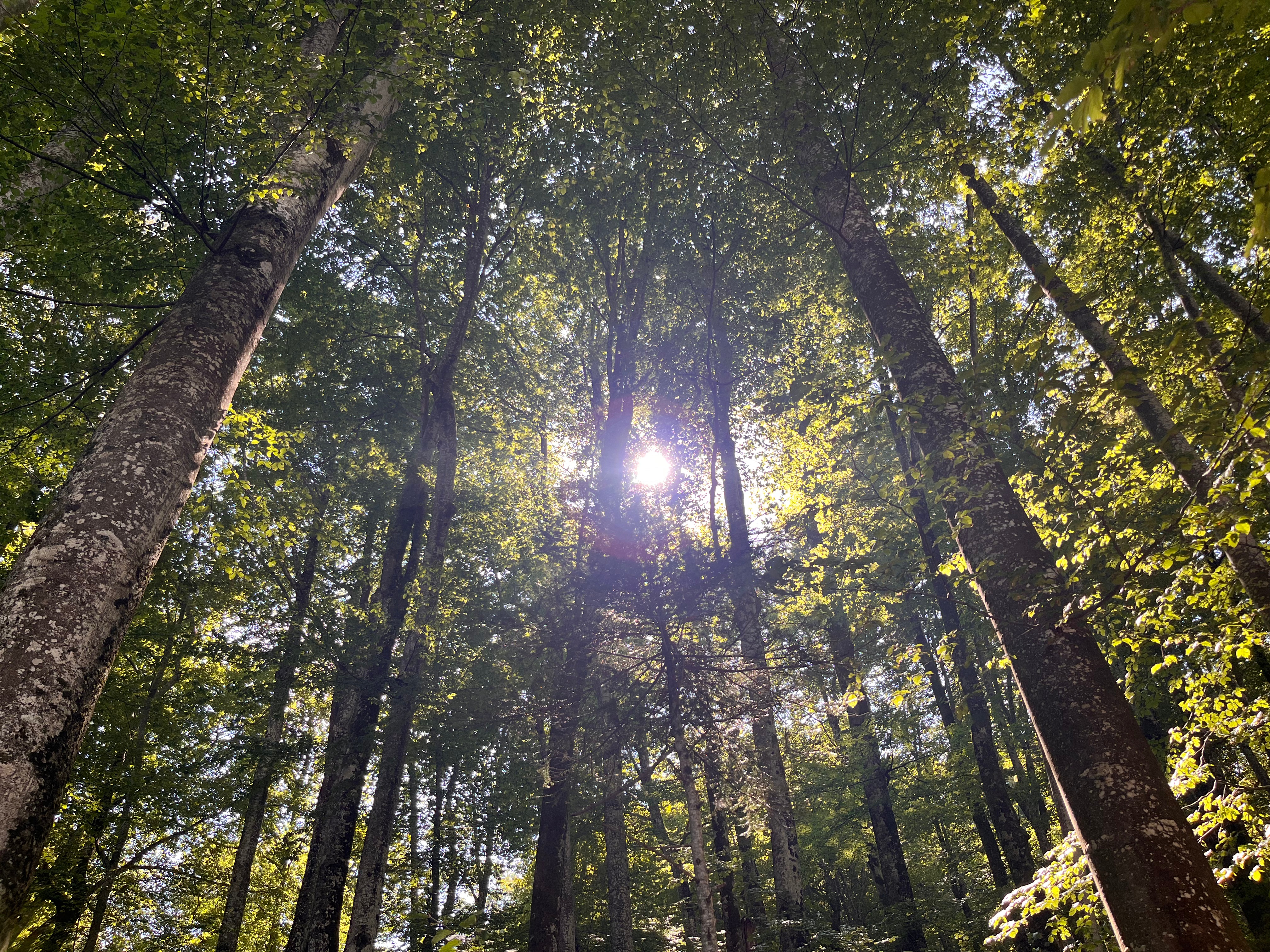
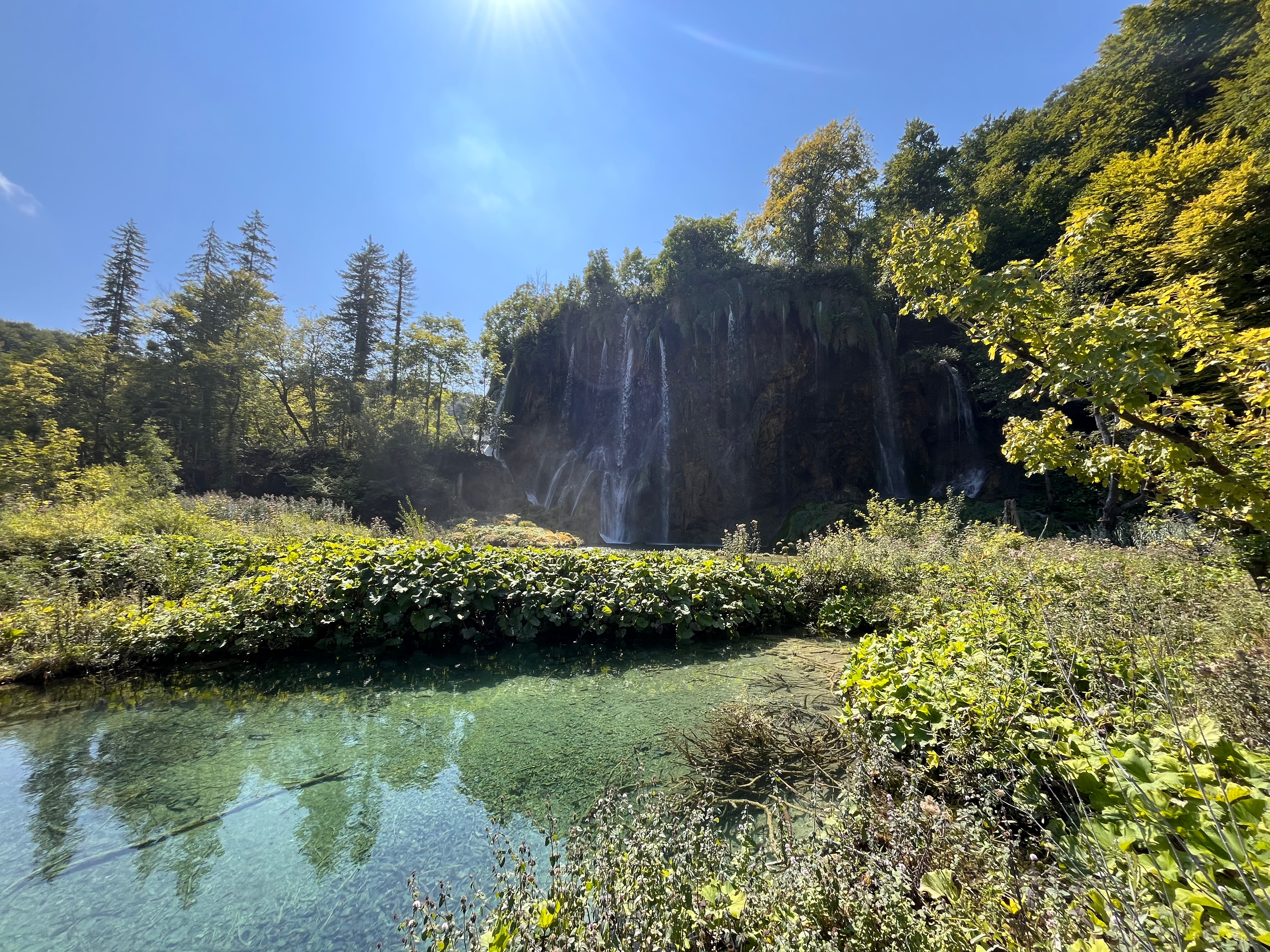
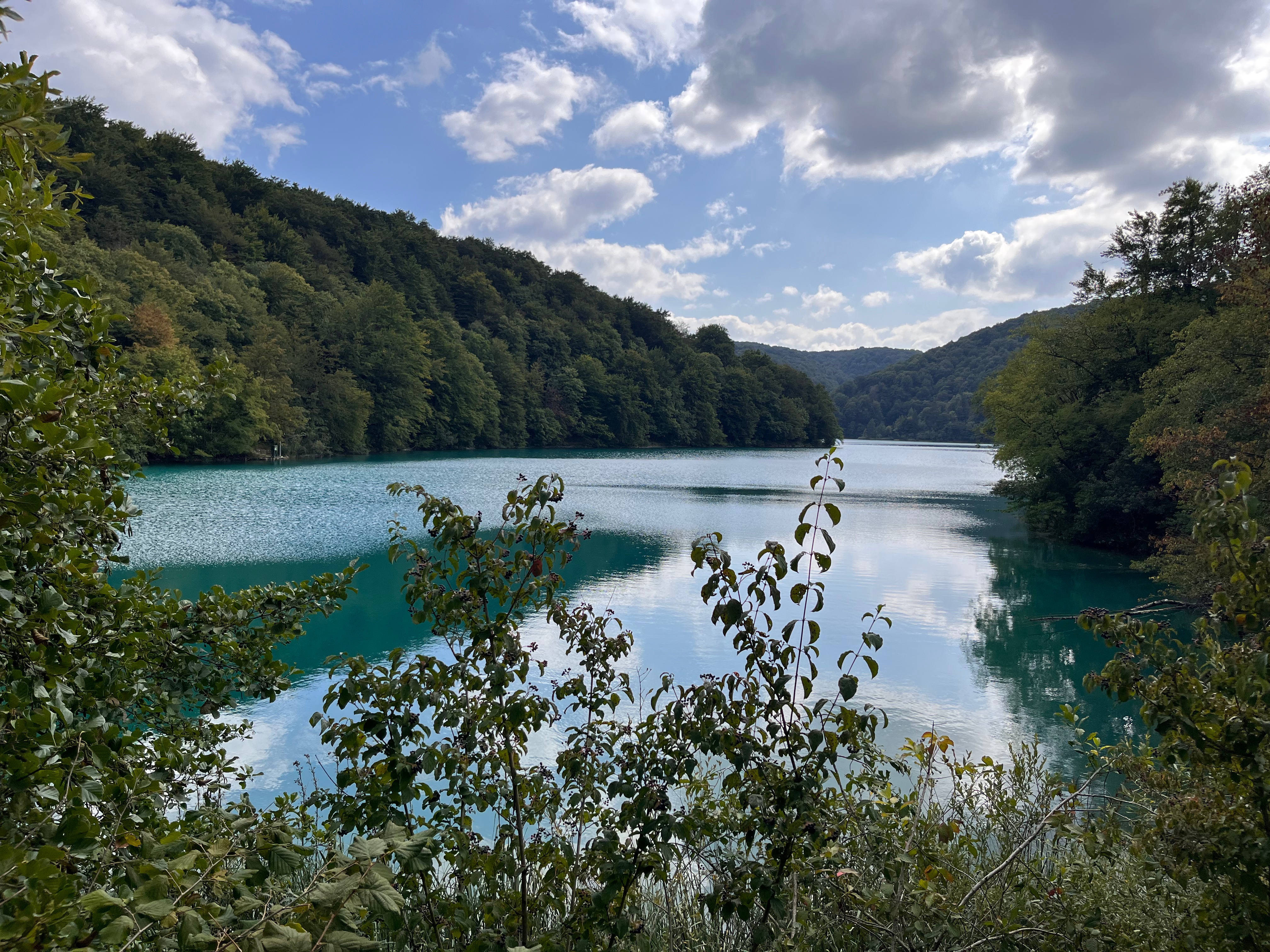
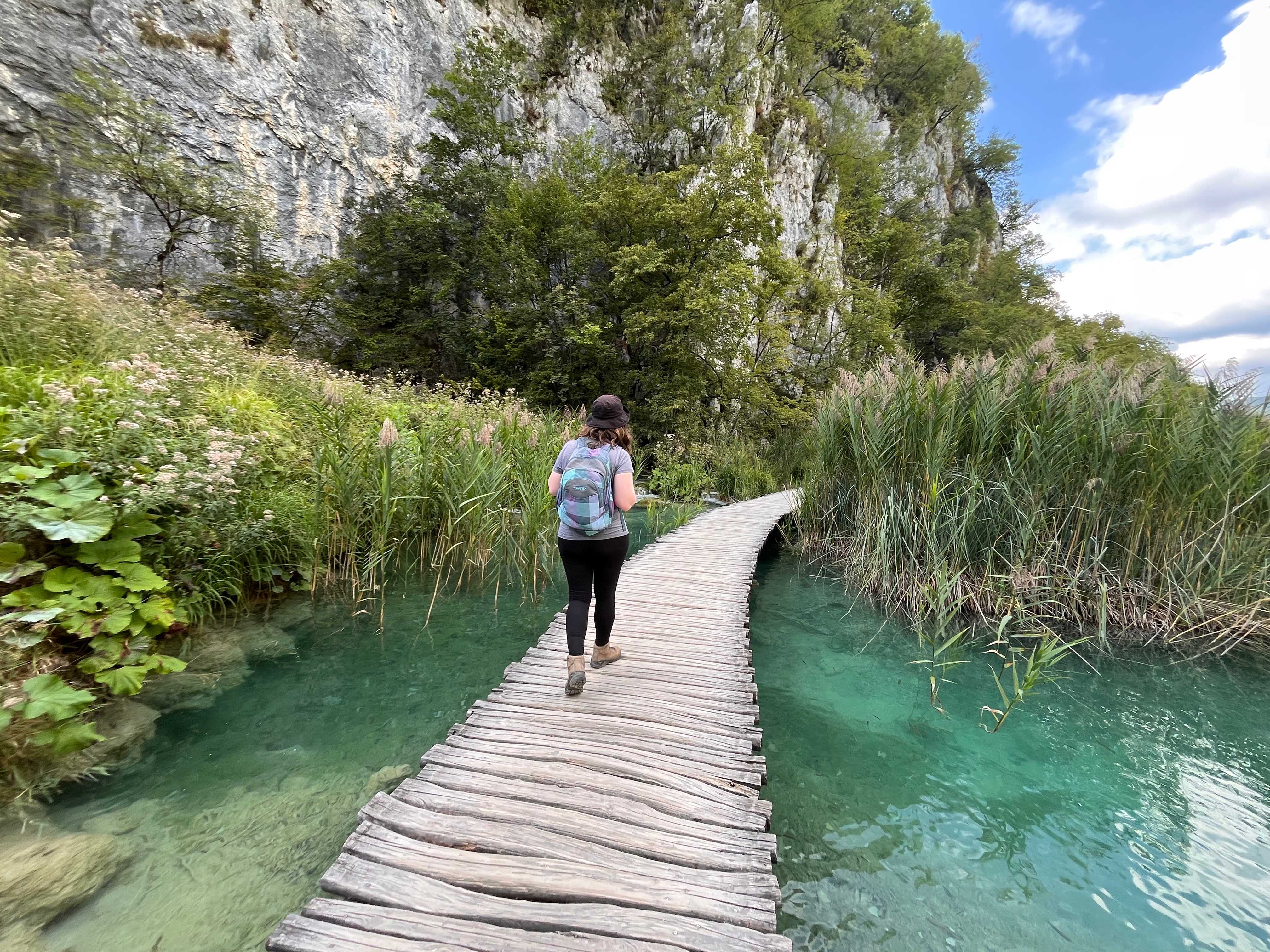
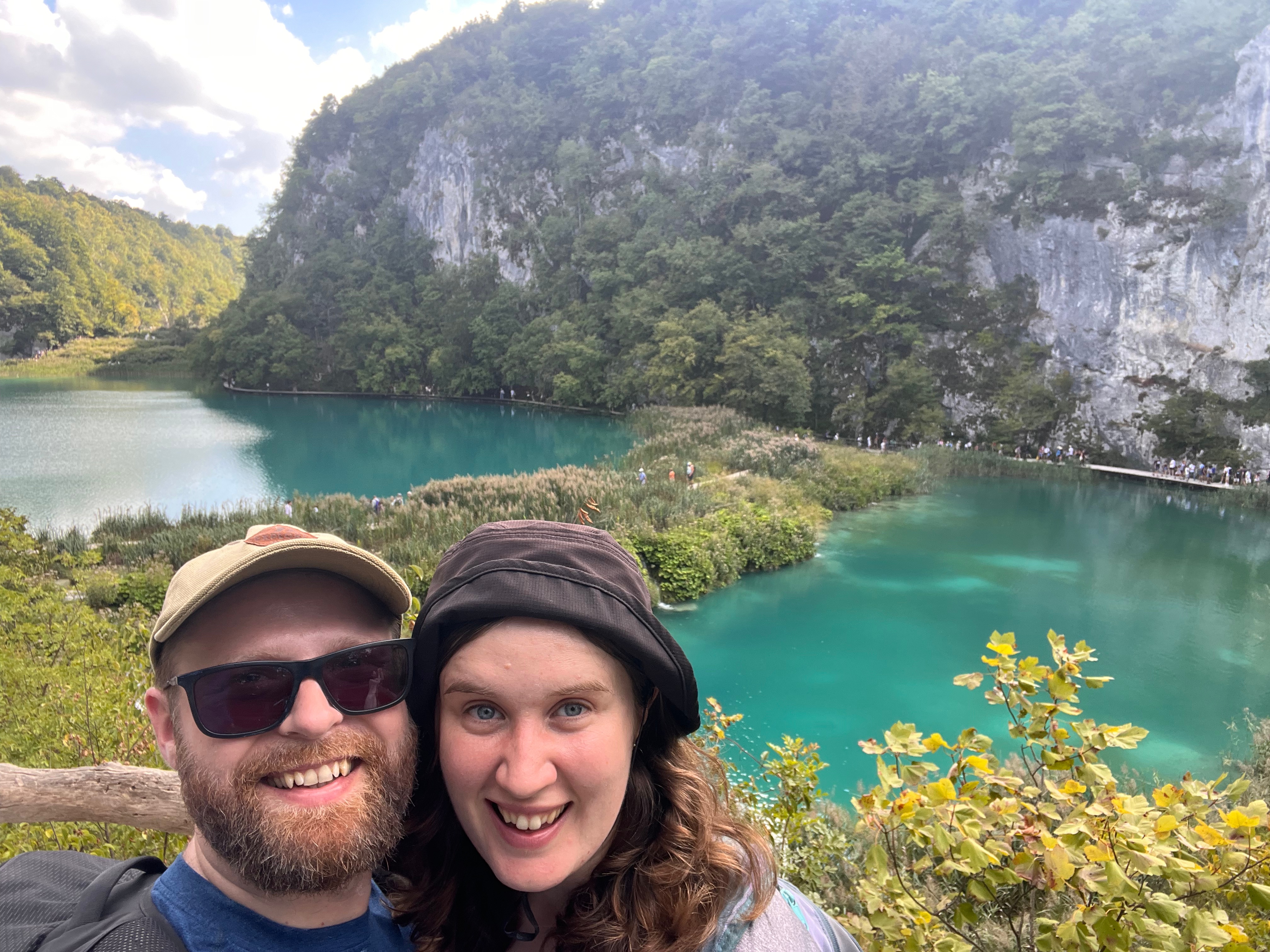
Over thousands of years, water flowing over limestone and chalk has deposited travertine barriers, creating natural dams that formed a chain of beautiful lakes, caves, and waterfalls. The shimmering lakes really are as turquoise as they look in the photos, and the sound of running water follows you the whole way around. Unfortunately no swimming is allowed (unless you have an accident…).
Our guided trip began with a panoramic bus ride to the upper lakes, followed by a walk along wooden boardwalks that wound over cascades and waterfalls. From there, we crossed the largest lake by boat to a wide picnic area, before looping back through the lower lakes and past the park’s main waterfalls. Park tickets cost €35 each and were included in the day trip price. There seemed to be quite a complicated system for parking and timed entry, so it was great to have all of that organised for us.
Magical Plitvice was a wonderful way to mark the end of our bonus Croatian adventure. Stay tuned for a Slovenian Fairytale coming soon.
 Laura writes...
One thought on “Zagreb & Plitvice Lakes”