To read about the first part of our Slovenian adventure, click here.

We ended our holiday with a trip to Ljubljana, Slovenia’s capital, also known as the Dragon City. It’s a one-hour bus journey away from Bled and a fantastic place to spend a couple of days. I was worried it wouldn’t be as good as the week we’d just had, but I needn’t have been – we loved it! Here’s the Ljubljana lowdown…
Where we stayed
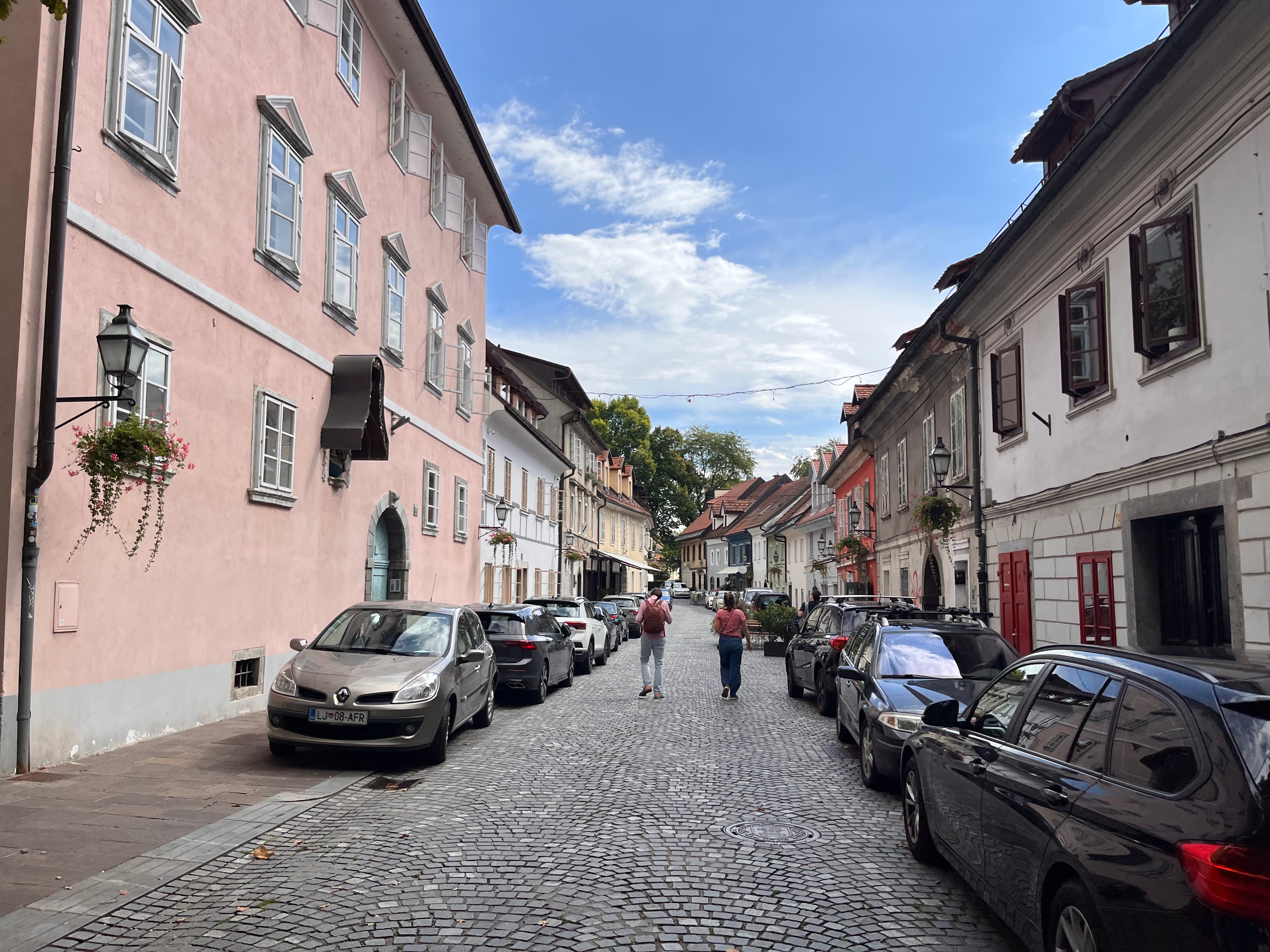
We found Pink House Studio on booking.com somewhat by chance, so were chuffed when it turned out to be a spacious, well-equipped apartment in a great location. It was right next to one of the sets of steps up to the castle and just outside the Old Town, which made it very quiet despite being so central. Everything was walkable (with the exception of Ubers back and forth to the station).
What we ate
It was pouring when we arrived at the bus station, so we took shelter in a salad bar called Bife, recommended in a free map guide on the bus. I would recommend! There were no English menus, but I ended up with something delicious.
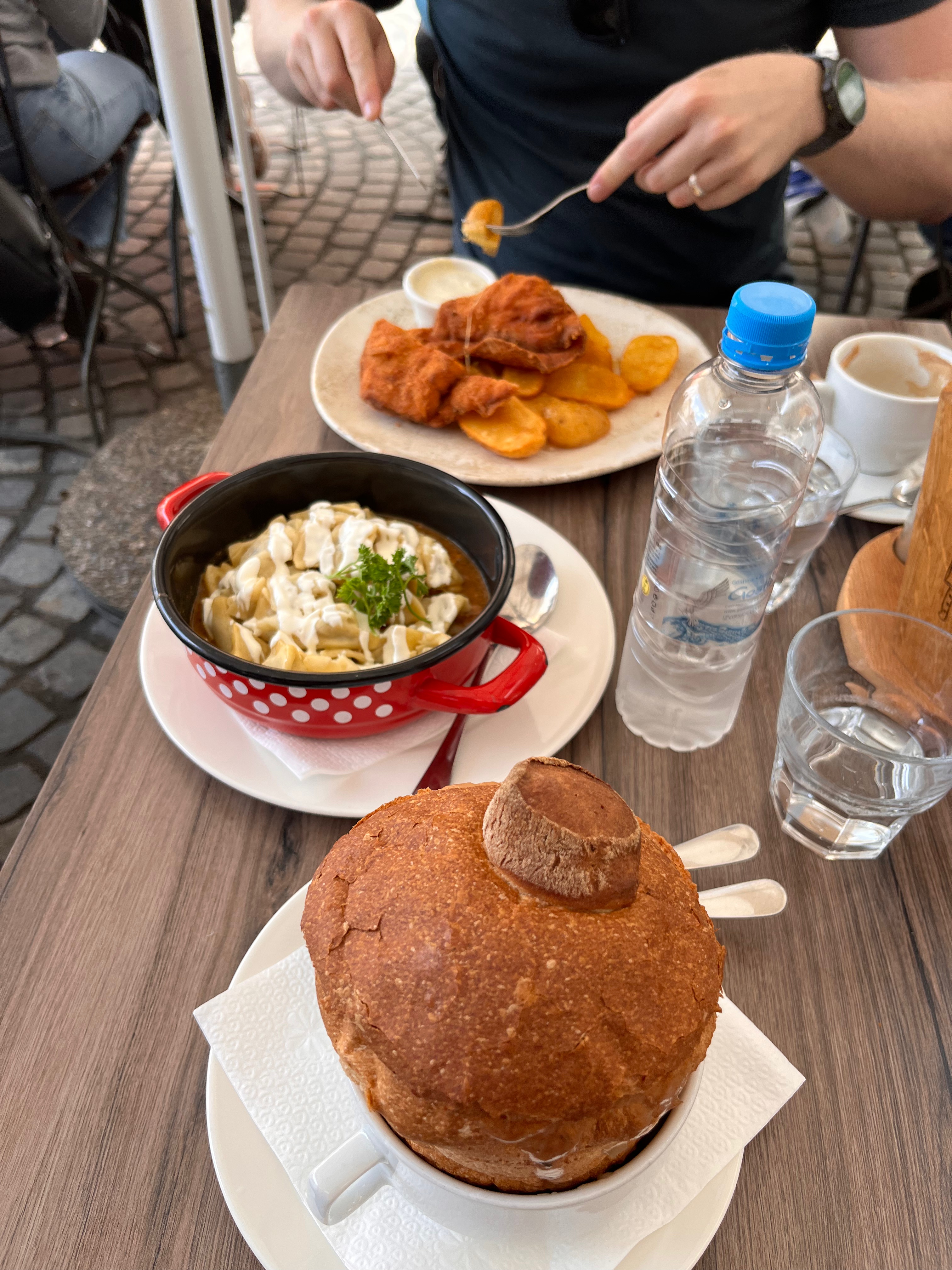
We had lunch one day at Gostilna Sokol, a traditional Slovenian restaurant recommended by the tour guide. My mind was blown by the Gobova juha v kruhovi skodelici, or mushroom soup in a bread bowl. The bread is hollowed out, then baked or toasted to create a bowl that won’t absorb too much of the soup. When the bread has been used to scoop up the last of the soup, you can eat it or turn it into croutons. This is a common way to serve traditional soups in Slovenia, and makes for good photos too!
We were lucky to coincide our trip with the Odprta kuhna or Open Kitchen event on Pogačarjev trg. Every sunny Friday between March and October, chefs from all over the country serve up street food in a lively atmosphere to locals and tourists alike. It’s not just Slovenian cuisine either; food from all over the world was represented. We had a funky Caesar Salad and homemade lemonade.



Walking tour highlights
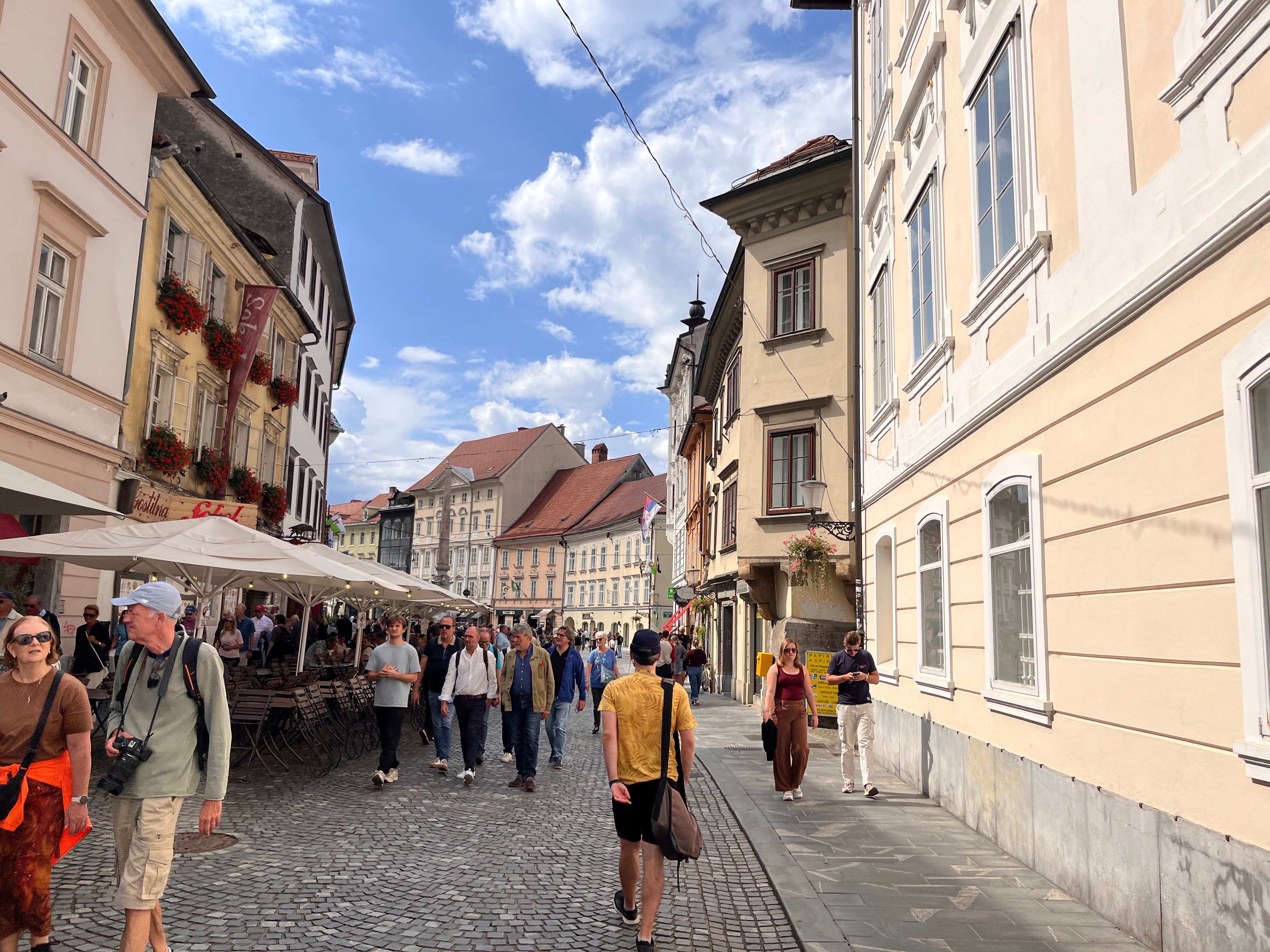
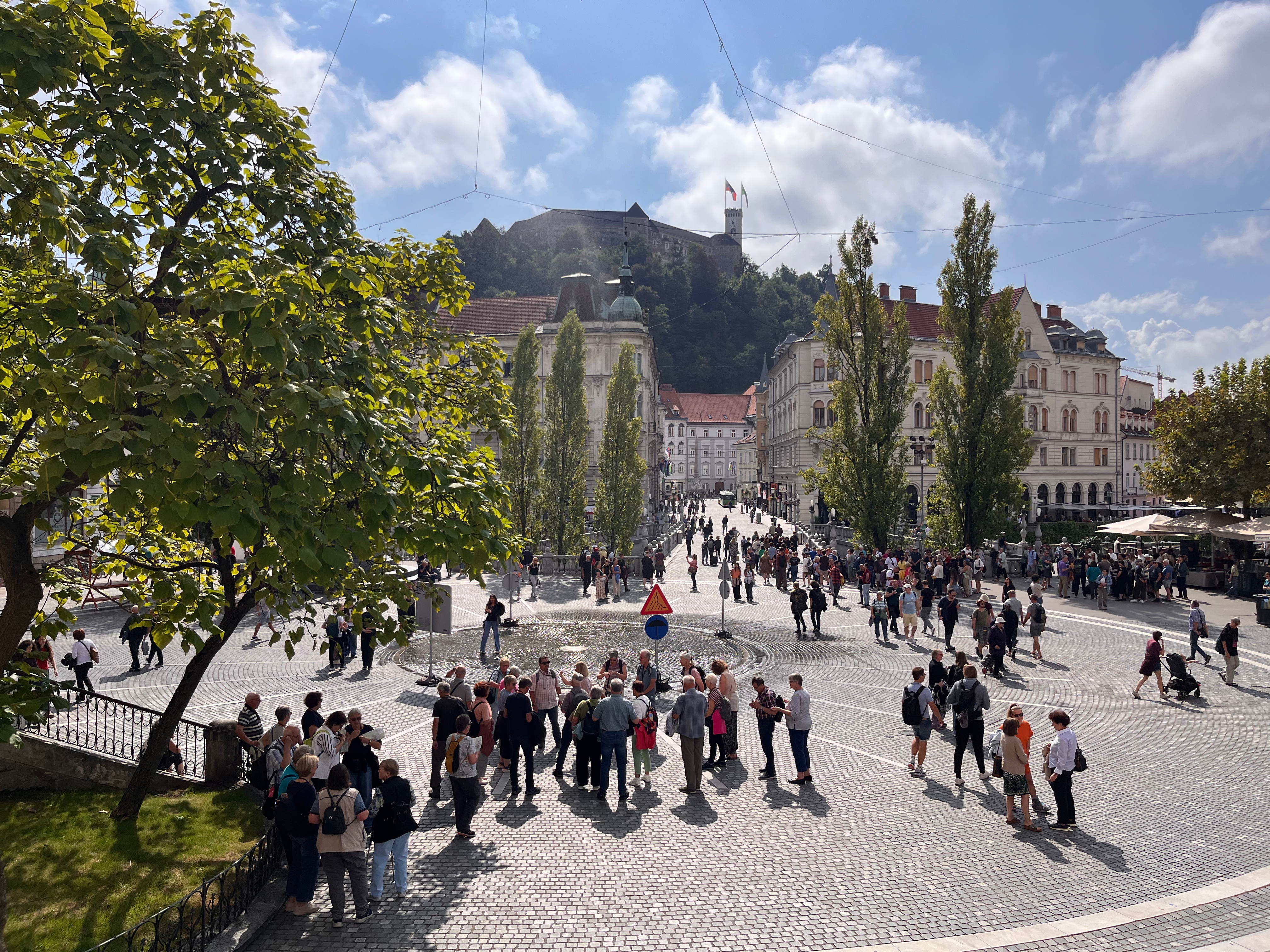
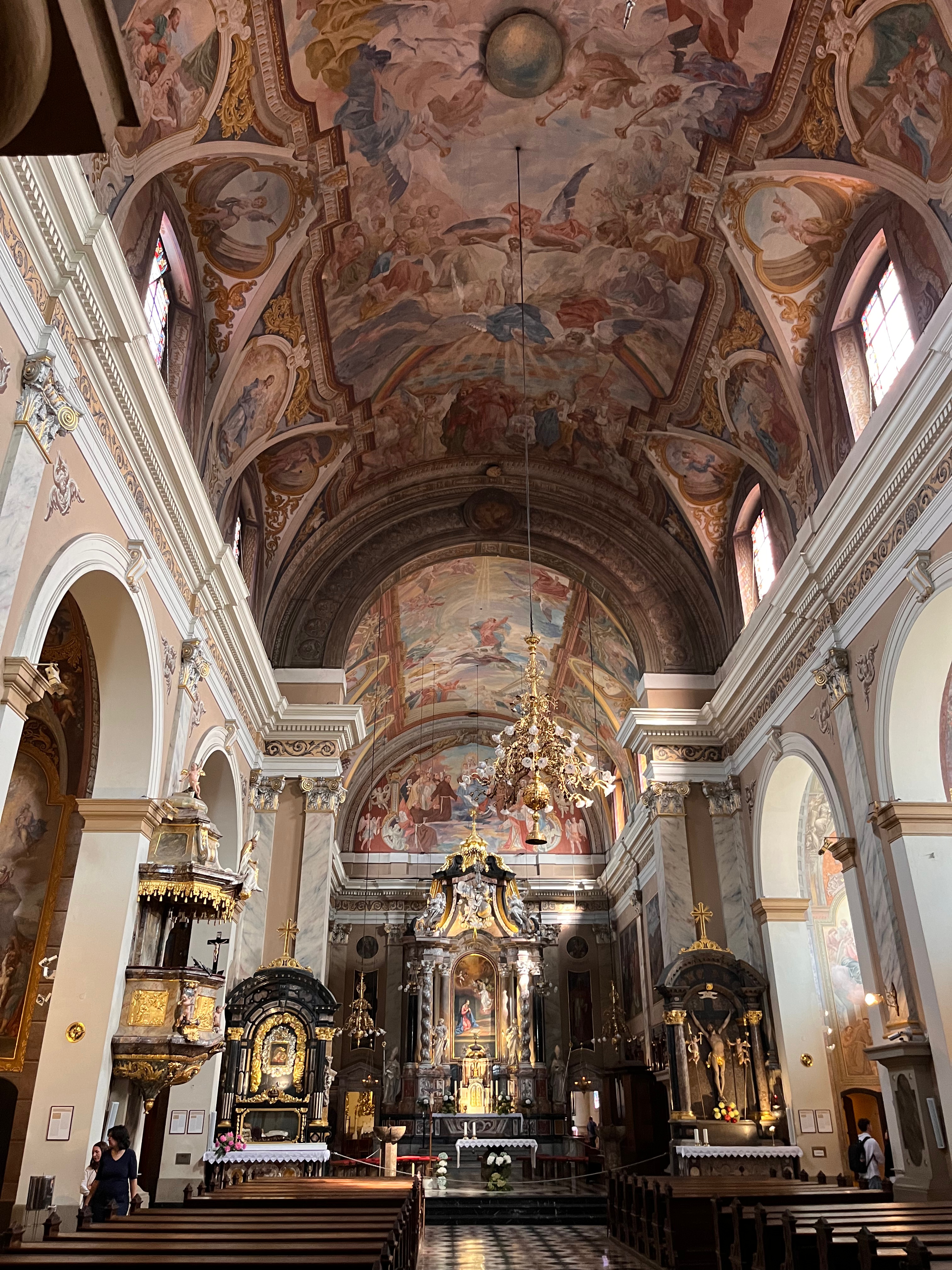
My first impressions of Ljubljana were that it was small, green, pedestrian-friendly and lovely! We did the Classic Free Walking Tour at 11am, starting outside the bright pink church in the main square, Prešernov trg. It was €3 to visit the church, and well worth it for the beautiful interiors and multiple chapels. If you’re lucky, you might get to hear the organ being played, too.
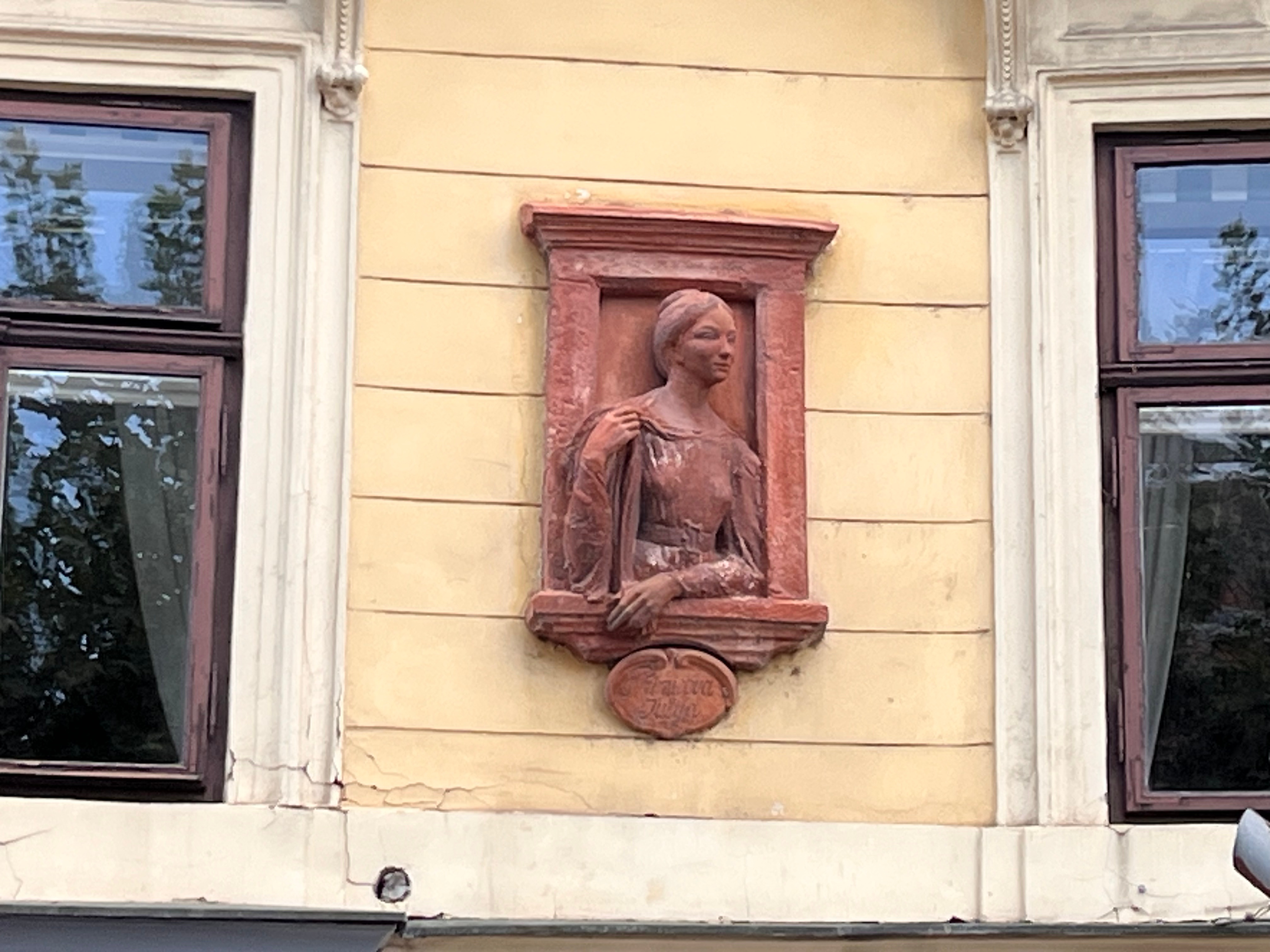
The square is also home to a statue of France Prešeren, considered to be the greatest Slovene poet. Having a poet as a national icon, rather than a political or military figure, immediately made me love the city. His statue symbolically faces a statue of Julija Primic, his great love, who looks wistfully out of a window at him across the square. But alas! His love went unrequited; her family disapproved, so Julija eventually married someone else, while he remained infatuated with her for the rest of his life.
Above Prešeren, his poetry muse holds a laurel wreath. You might notice that Prešeren’s muse is topless, and from the steps of the church, the statue is cleverly disguised by a row of trees. They were planted there by a priest who didn’t want his parishioners to be scandalised as they left Sunday Mass…
Also of note in the main square: Ljubljana has its own weather system! A collection of misters disperse a fine mist to cool the area down on hot summer days (which can exceed 40°C), with people free to criss-cross or avoid the rainy part of the square.



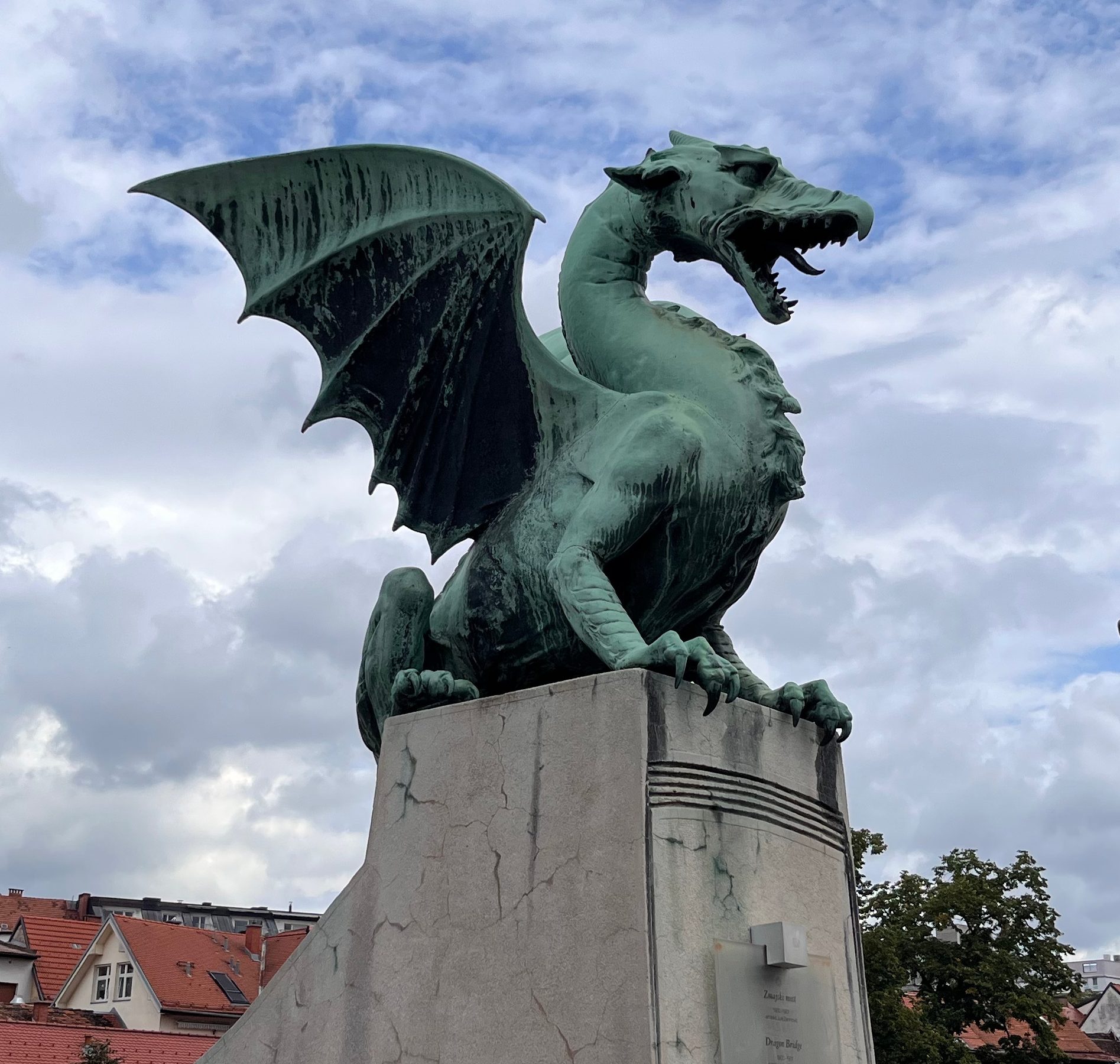
Ljubljana’s ‘Dragon City’ nickname comes from Greek Mythology. Legend has it that the founders of Ljubljana fought and defeated a dragon as they were claiming the land. There are 20 dragons on the aptly named Dragon Bridge, and dragons also adorn the flag and manhole covers on the street.
The door of the Cathedral depicts scenes from Slovenia’s history, commissioned for a papal visit 30 years ago. Indeed, Pope John Paul II features on one of them. I liked the group of heads facing away, representing shame over the dark parts of the 20th century, namely two world wars and communism, and the group of heads facing forward, smiling, representing Slovenia’s day of independence and a happier future.

In the afternoon, we did the Old Town and Castle tour, which explored the area near our accommodation. We preferred Bled Castle, but this one is free to enter and offers great views of the city. (Don’t be confused by the ticket booth at the entrance; only the museums inside are ticketed.)
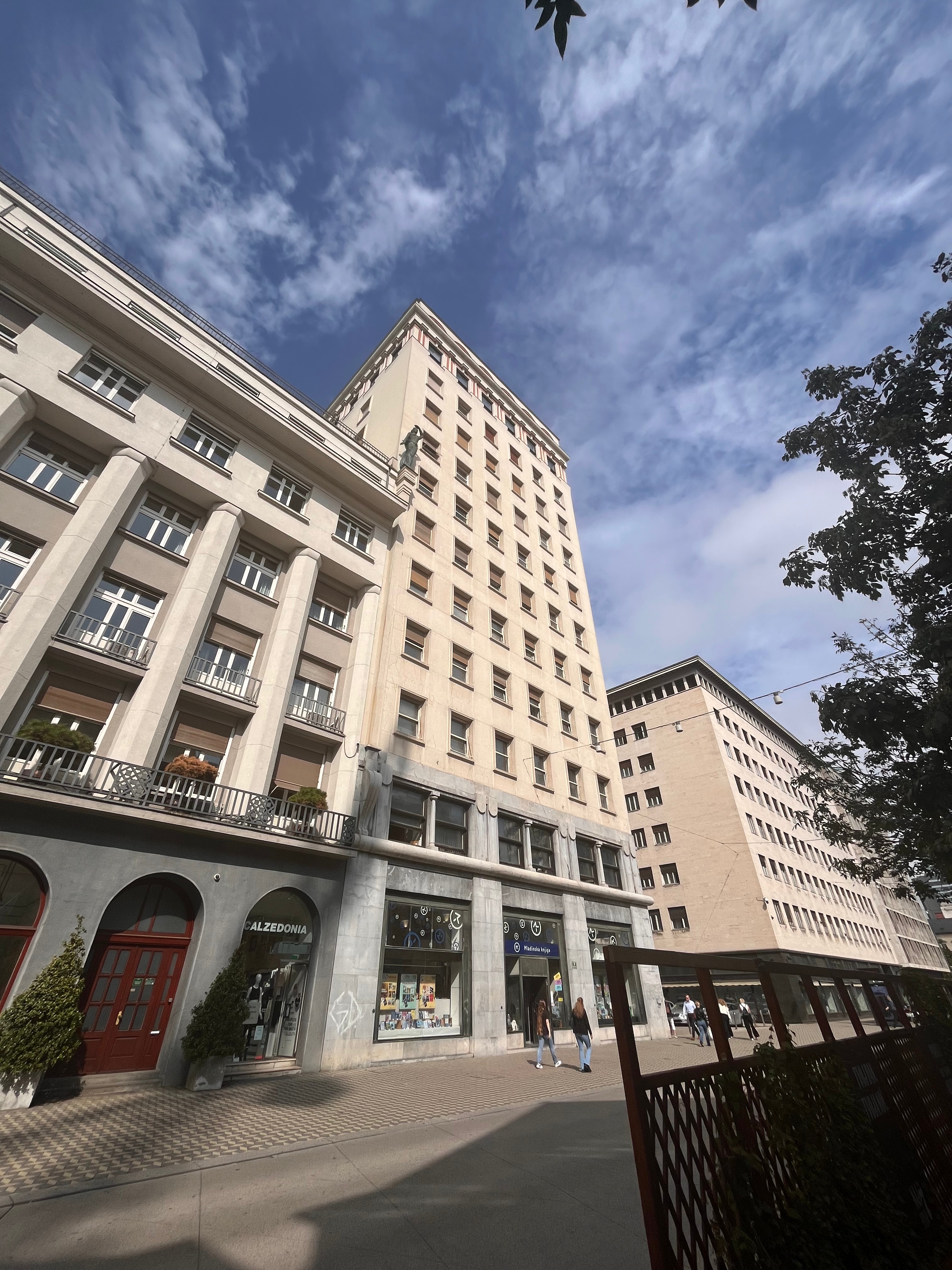
For more views, our tour guide recommended that we go up the Nebotičnik or skyscraper. He said that it really was a skyscraper when he went up with his Dad as a kid – it was the tallest building in Yugoslavia at one point – whereas now it is surrounded by other tall buildings. It’s free to go up and see the view of the city, and there’s a bar at the top if you’d like a drink whilst you’re there.
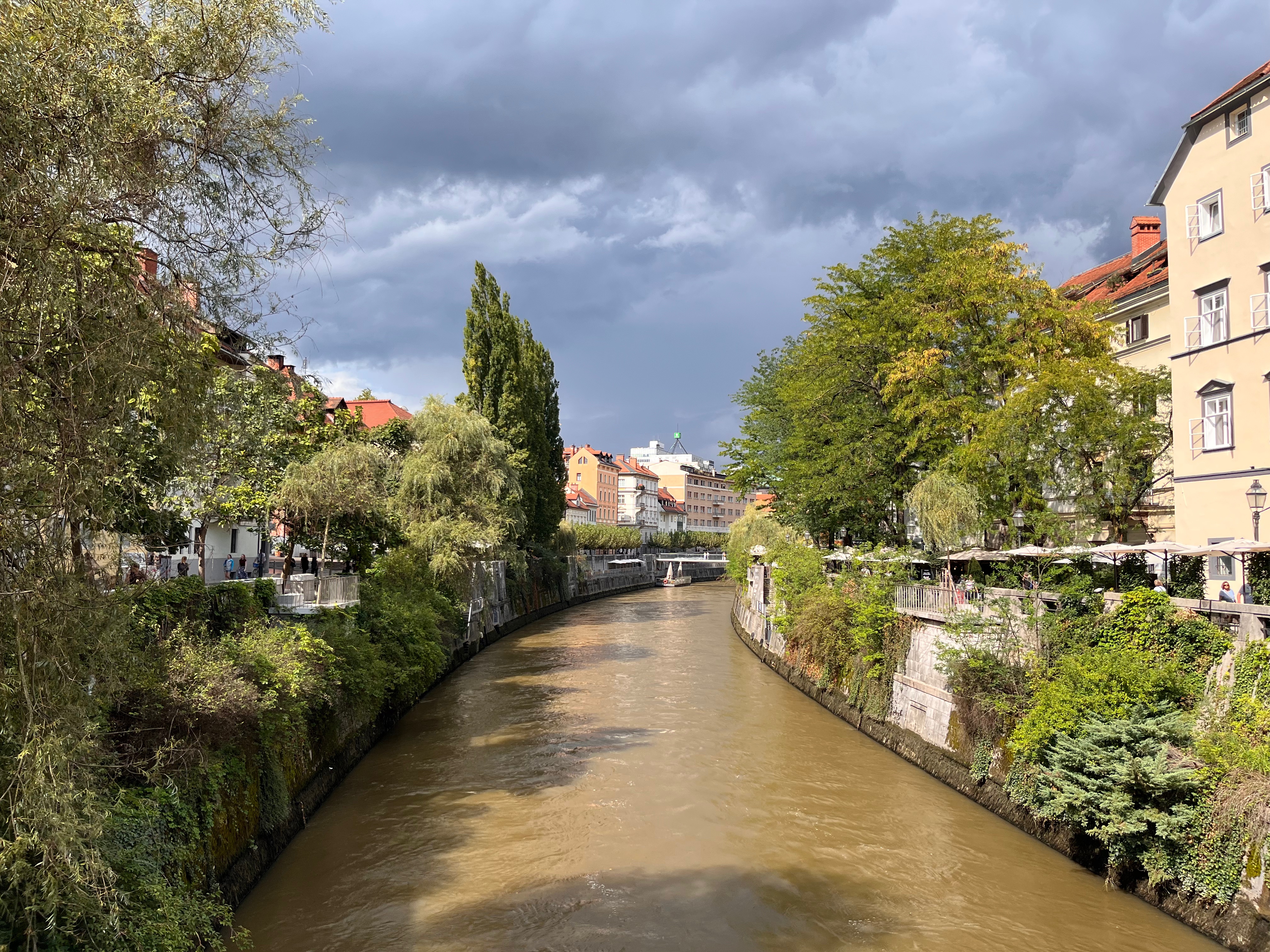


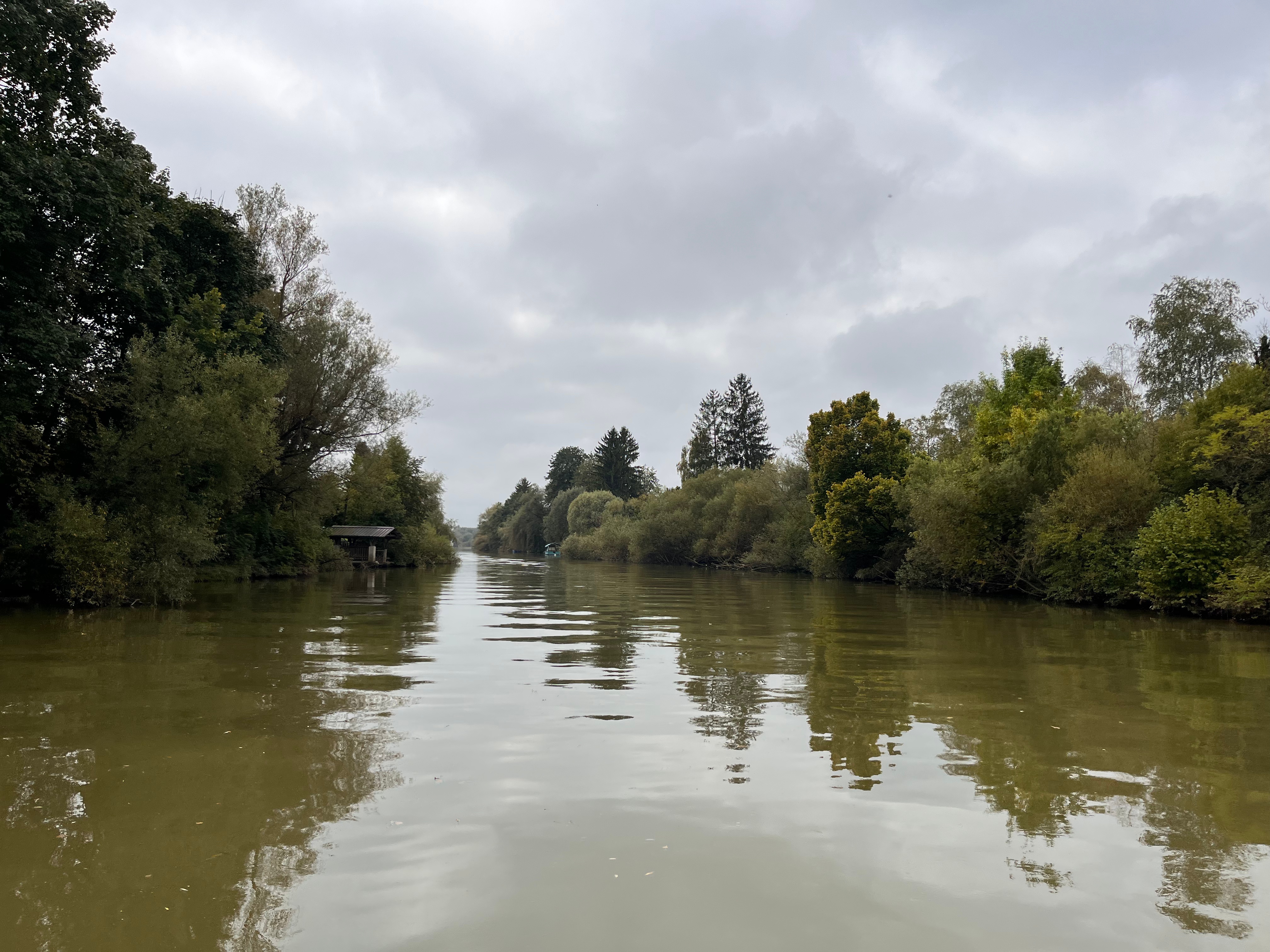
We finished off our Ljubljana sightseeing with a boat trip. All the boat trips are €15 (except for a more expensive old, famous wooden boat), but some rides are 45 minutes, and others are an hour, so pick wisely to get the most bang for your buck. I’d also recommend going just after they open, so you can get the best seats. The boat trips go to the Ljubljana marshes, a vast wetland area with diverse wildlife, which, to my surprise, were only 20 minutes from the city centre.
All in all, a thoroughly enjoyable couple of days exploring a lovely, underrated city.
Piran trip
Having been inspired by watching Destination X before our trip (better reality TV shows are available…), I knew that Slovenia had a small piece of coastline that looked very beautiful. So when we saw an afternoon trip to Piran advertised, I knew we had to finish our trip there.
Piran is an hour and a half from Ljubljana, and our chatty guide, Tibor, spent the journey sharing more fun facts about Slovenia. (They are, in fact, just facts, but he said if you call them fun facts then everyone will listen.) Highlights included: Ljubljana is one of Europe’s safest and greenest capitals, the strong local coffee culture caused Starbucks to fail, Slovenia has three different climate zones (sub-Mediterranean, Alpine and continental) and 62% tree cover, Slovenians don’t like being confused with Slovakia (the Slovakian anthem has been played to Slovenians receiving medals), and, while Slovenia is great for tourists, it does share all the issues many countries have, with swings from the left to the right politically, a high cost of living and terrible traffic.
He also told us the story of the Slovenian extreme athlete Davo Karničar, who was the first person to achieve a continuous, full ski descent from the summit of Mount Everest to Base Camp, as well as several other extreme feats, including a ski descent from Annapurna. However, while he thrived in some of the world’s most dangerous environments, he died when he cut down a tree in his garden, and it fell on him. So the moral to that story is…? I’ll let you decide!
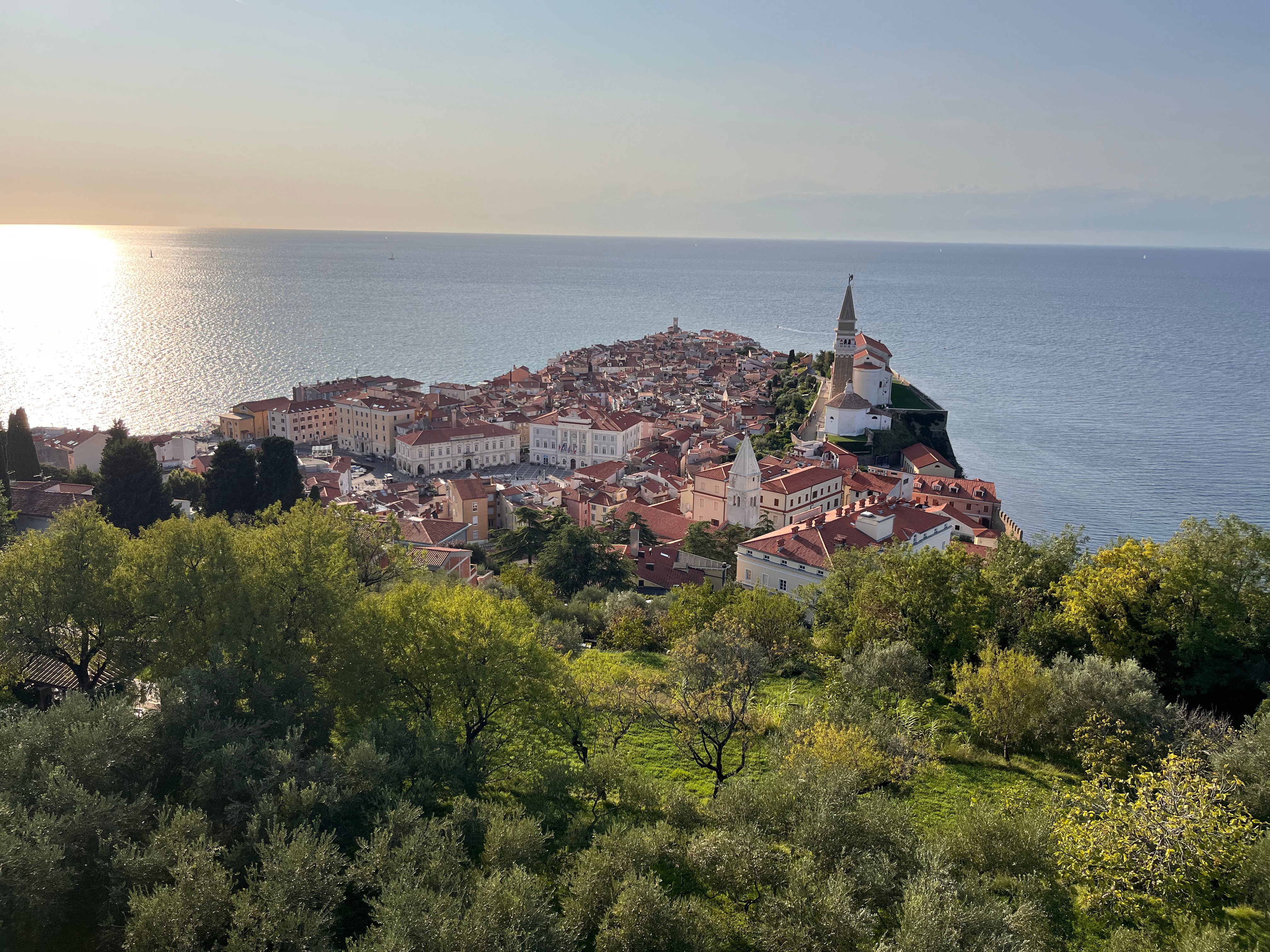
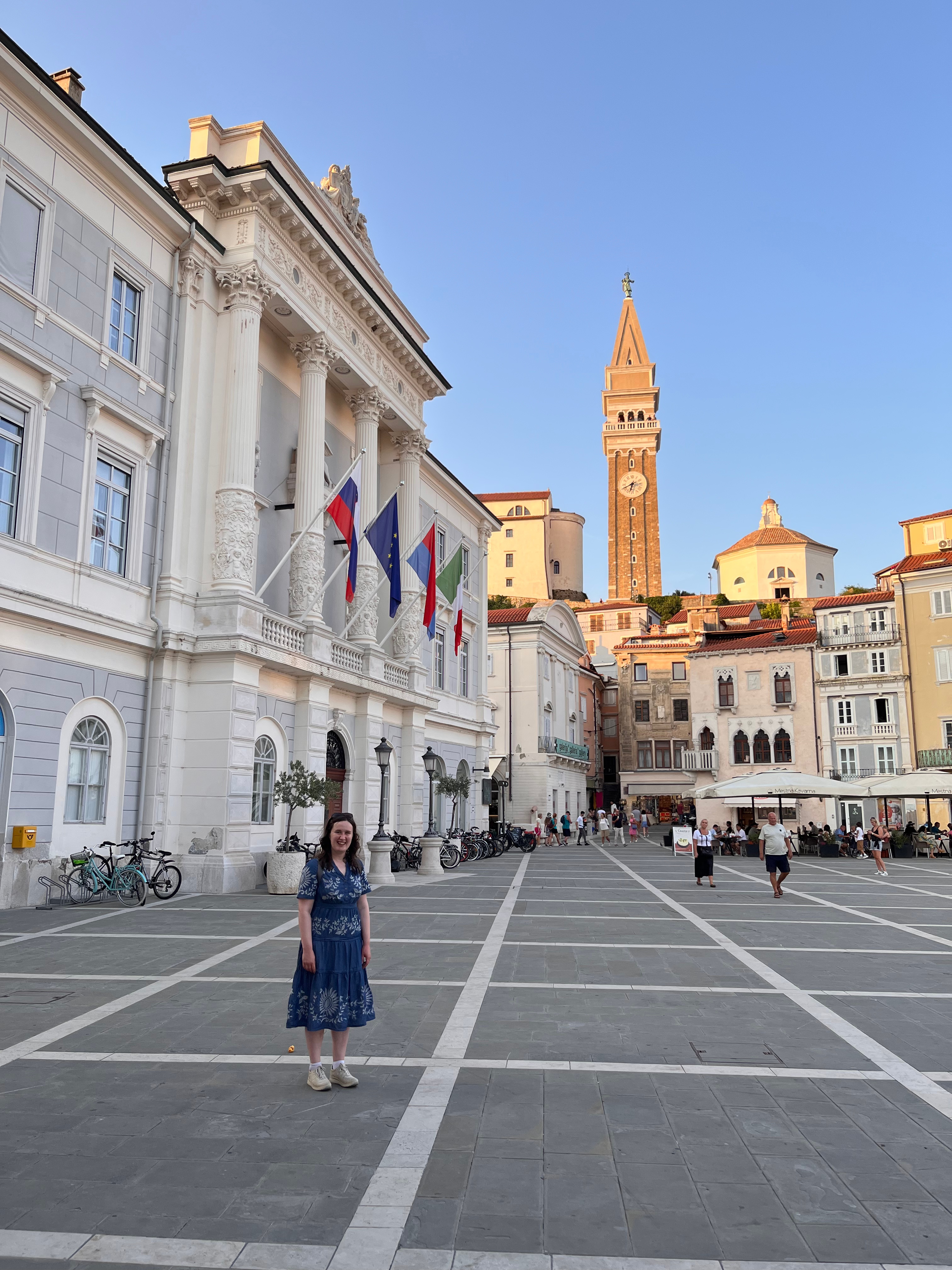
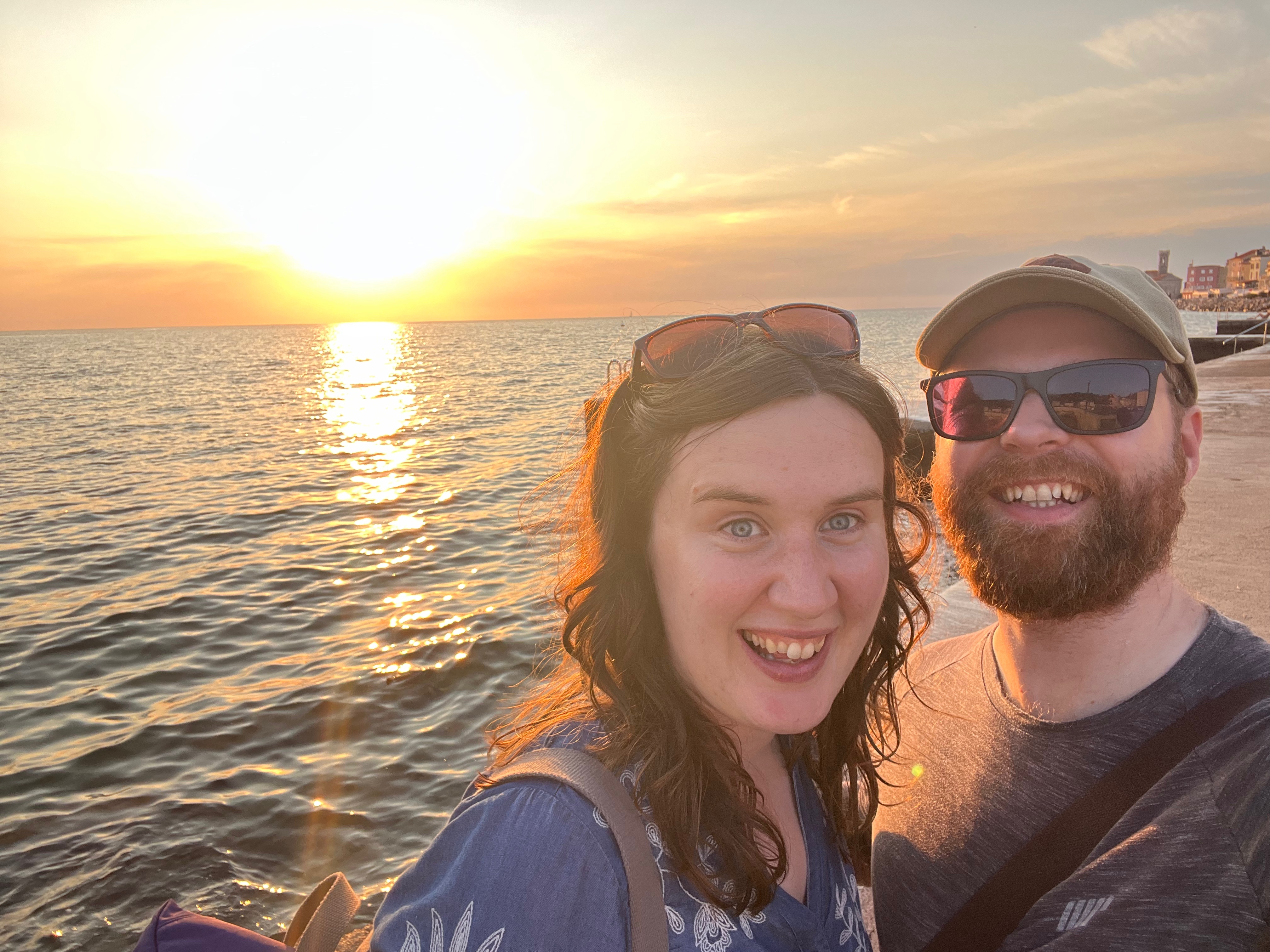
Our heads full of fun facts, we arrived in Piran and were dropped off with a few hours to explore. Italy has eaten away at most of Slovenia’s coastline, which is a bone of contention for many Slovenians, but Piran is a well-preserved Venetian Gothic old town nestled at the tip of a narrow Peninsula. We climbed St George’s Bell Tower (€3 cash entry), then walked along the city walls and their multiple towers (cash or card payment). The views of the town and sparkling sea were stunning; you can even see across to Venice on a clear day.
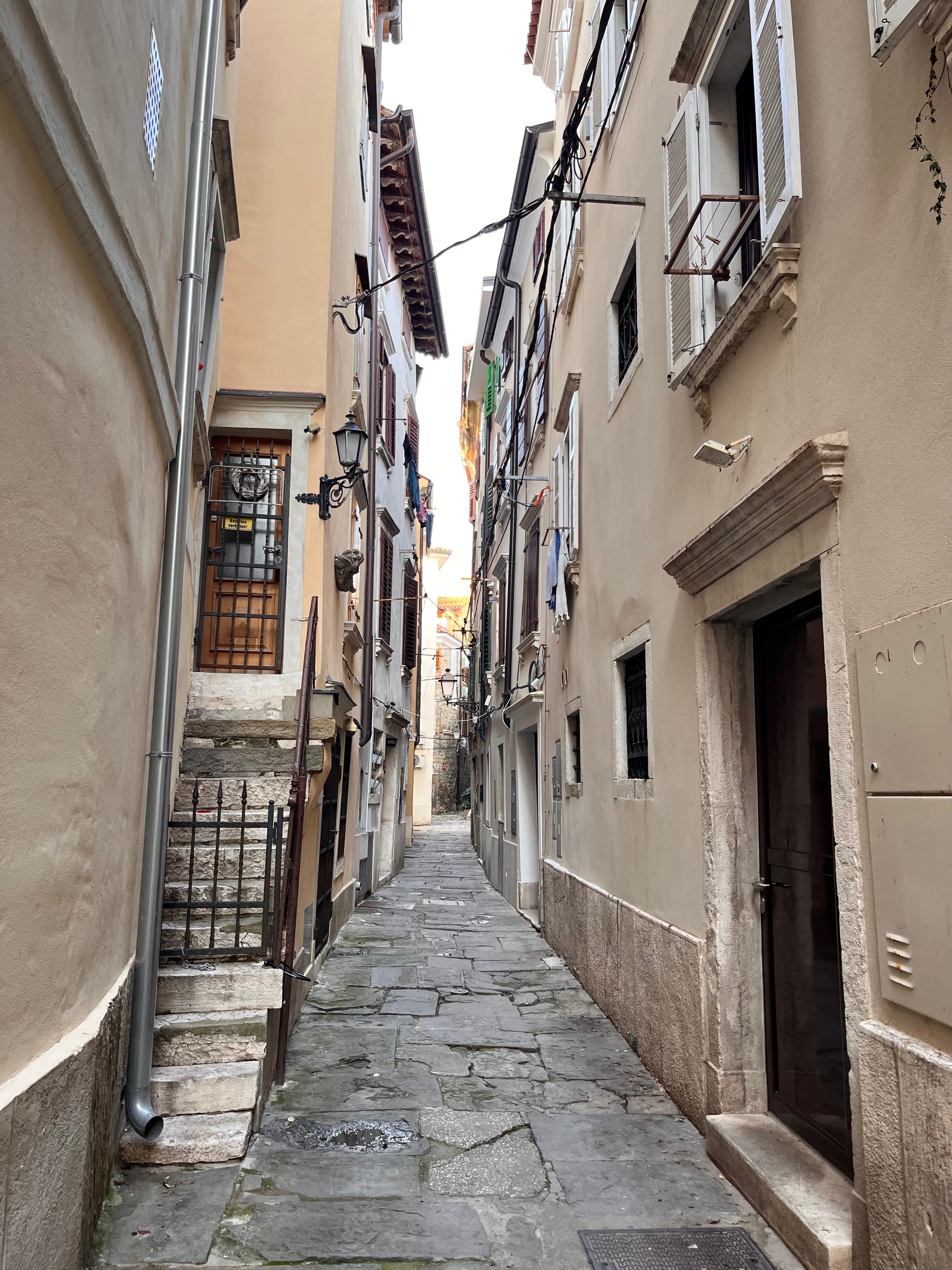
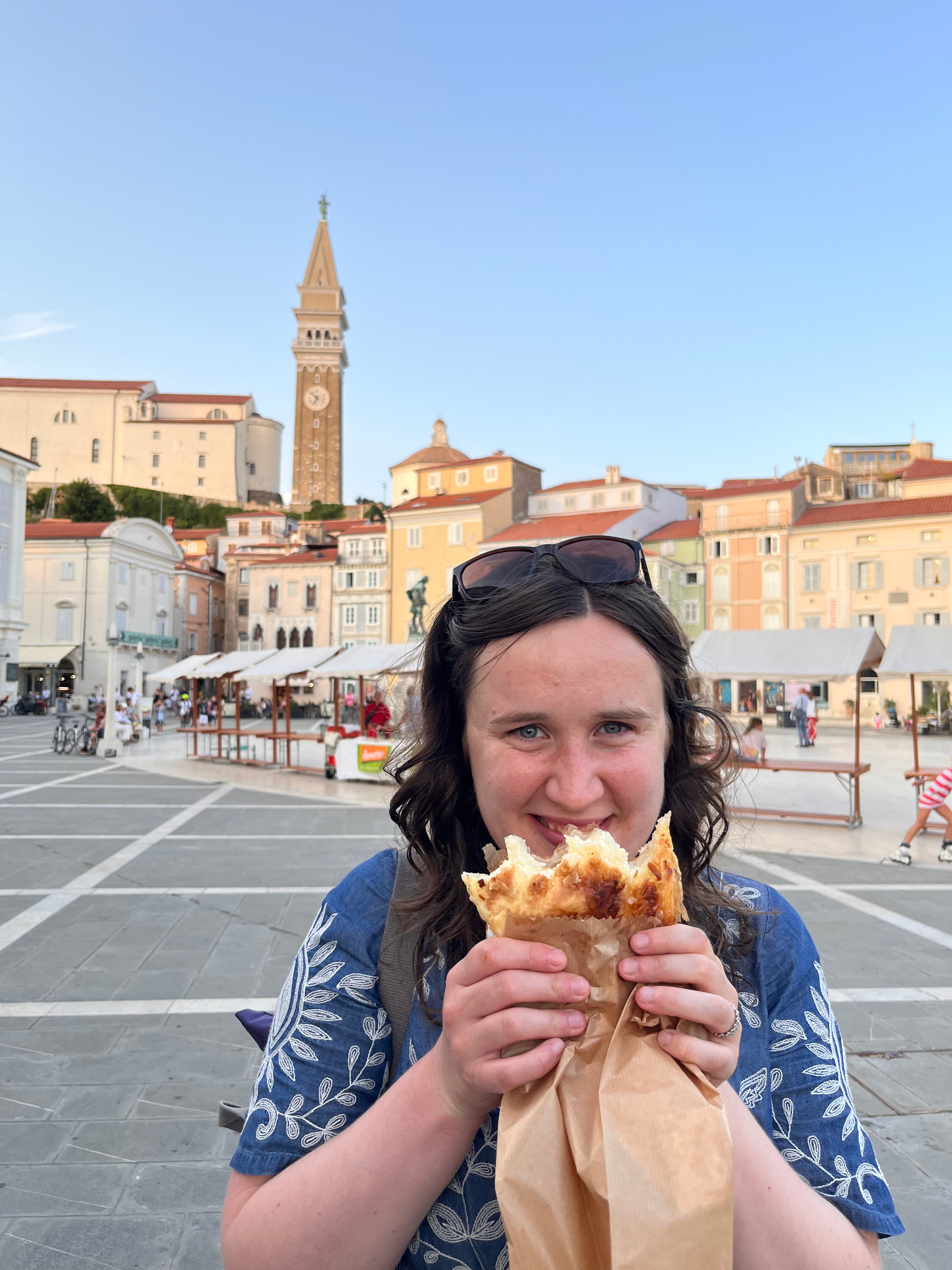
Tibor said that the best thing to do in Piran is to get lost, so we wound our way back to the main square through a higgledy-piggledy maze of narrow, cobbled streets, with washing hung high above us and hidden doorways aplenty. I managed a refreshing dip in the Adriatic swell before devouring a delicious Štruklji from the bakery, its cheese oozing between layers of flaky pastry.
While we could have spent longer there, Piran is an excellent place for an afternoon trip and a pretty unique place to visit if you have the chance to. It was the perfect way to end a fantastic trip.
 Laura writes...